Monday, May 7, 2018

Bringing my 2CV into the 21st Century

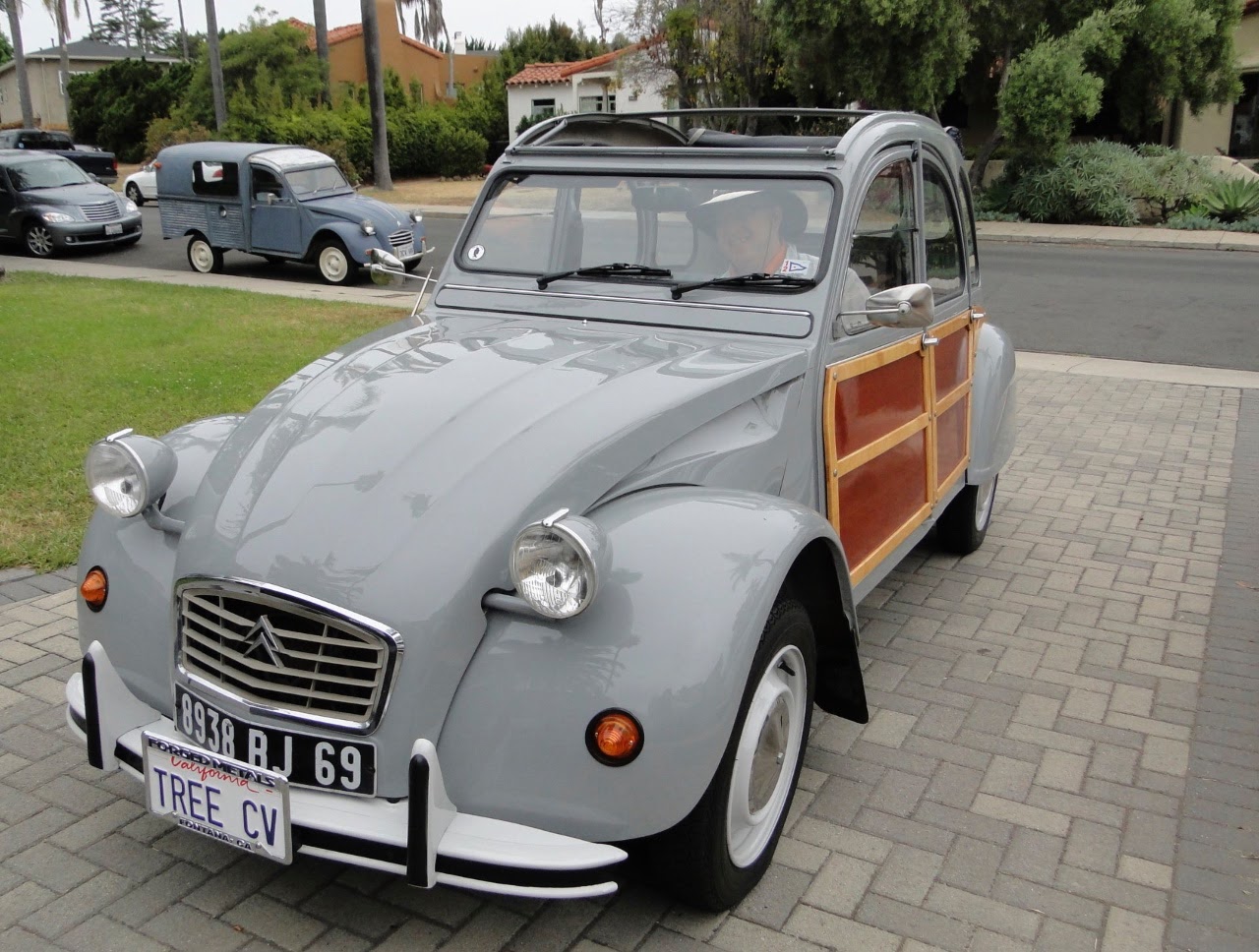
Regular readers know I have an odd assortment of vehicles, including this 2CV Woodie and an old Van.


I got the gray car in 1986 when a family from Lyon brought it to Canada for a vacation tour (a Frenchman would surely notice by the number plate). This is the first view I had of the car from my bicycle, near Banff somewhere in the Canadian Rockies. I didn't speak French back then but any car guy seeing a sign like that in the window knows it must surely mean "For Sale". 
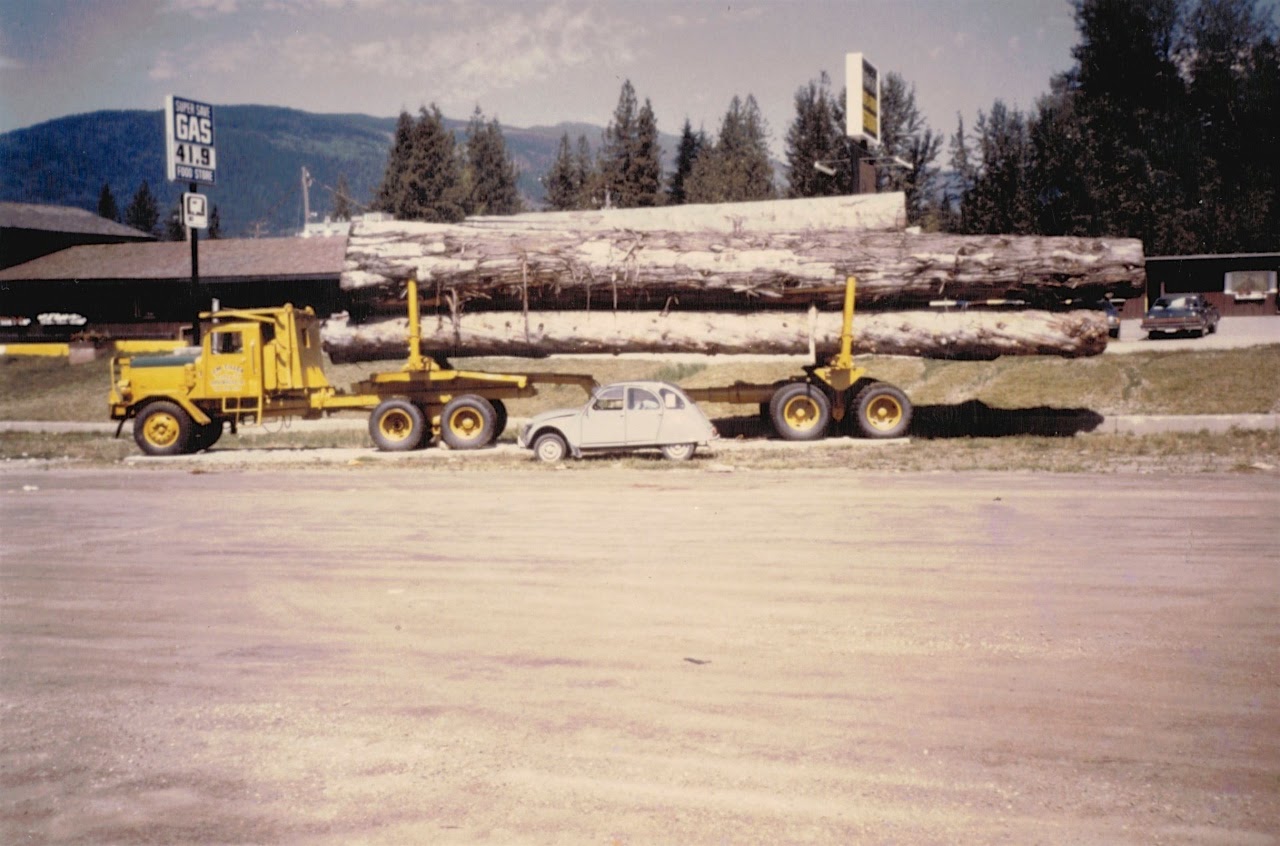


We stopped, found the owners, had a long happy lunch, and parted a bit enamored. The next day we saw them again and we struck a deal to buy the car. Of course, we were on bicycles, had no cash, etc but as they were headed to Vancouver anyway, they agreed to deliver the car to my mother's house near Seattle in a week. Here's the "drop-off" picture with happy at the wheel.
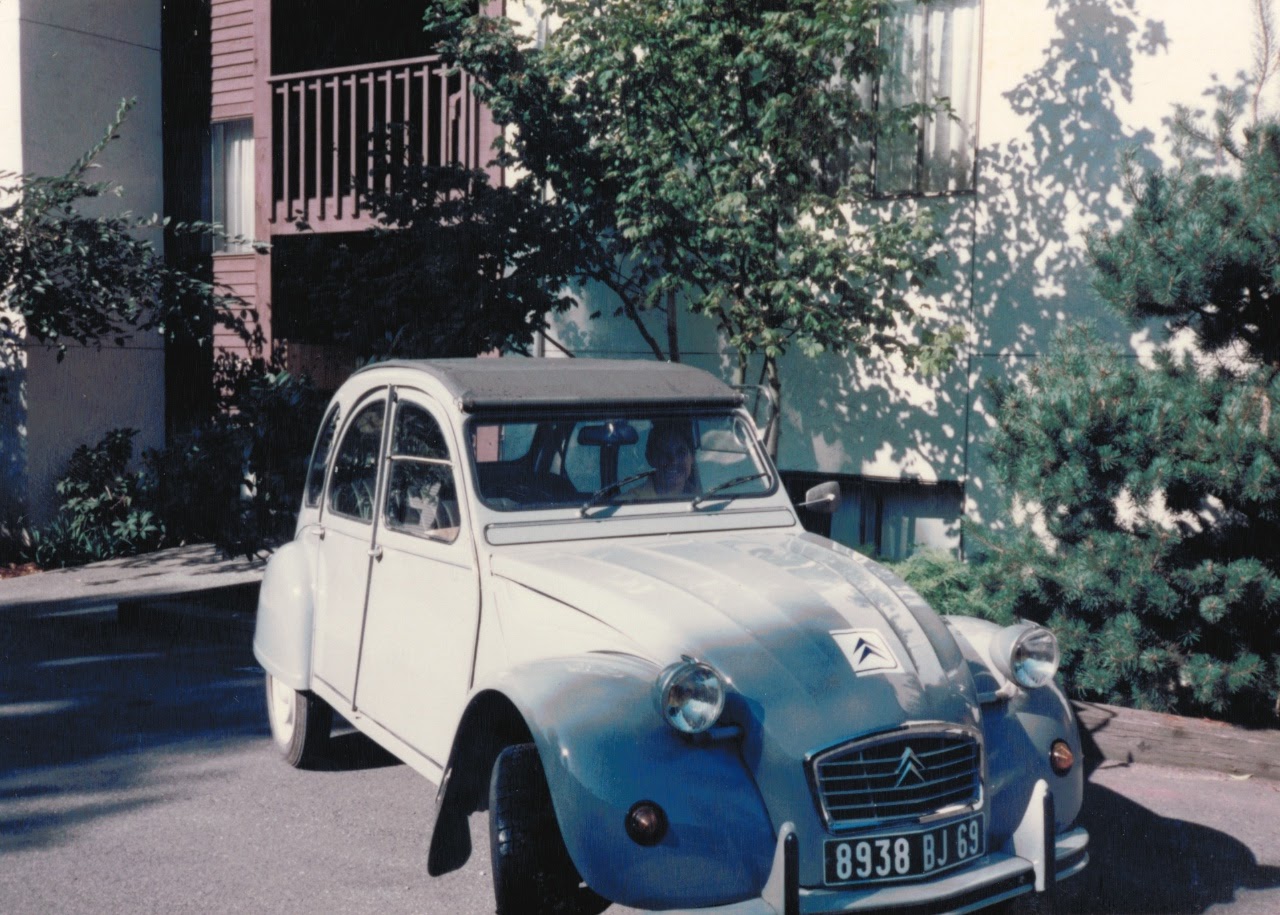
I had to fly home to go back to work, my wife went to Seattle and got the car, and we met up at Laguna Seca (you saw the Chevrolet event photos recently in this forum). We drove it home to San Diego and have enjoyed it for 30 years. Commuting to work, various trips, etc. in addition to crossing Canada, it's been to Area 51,
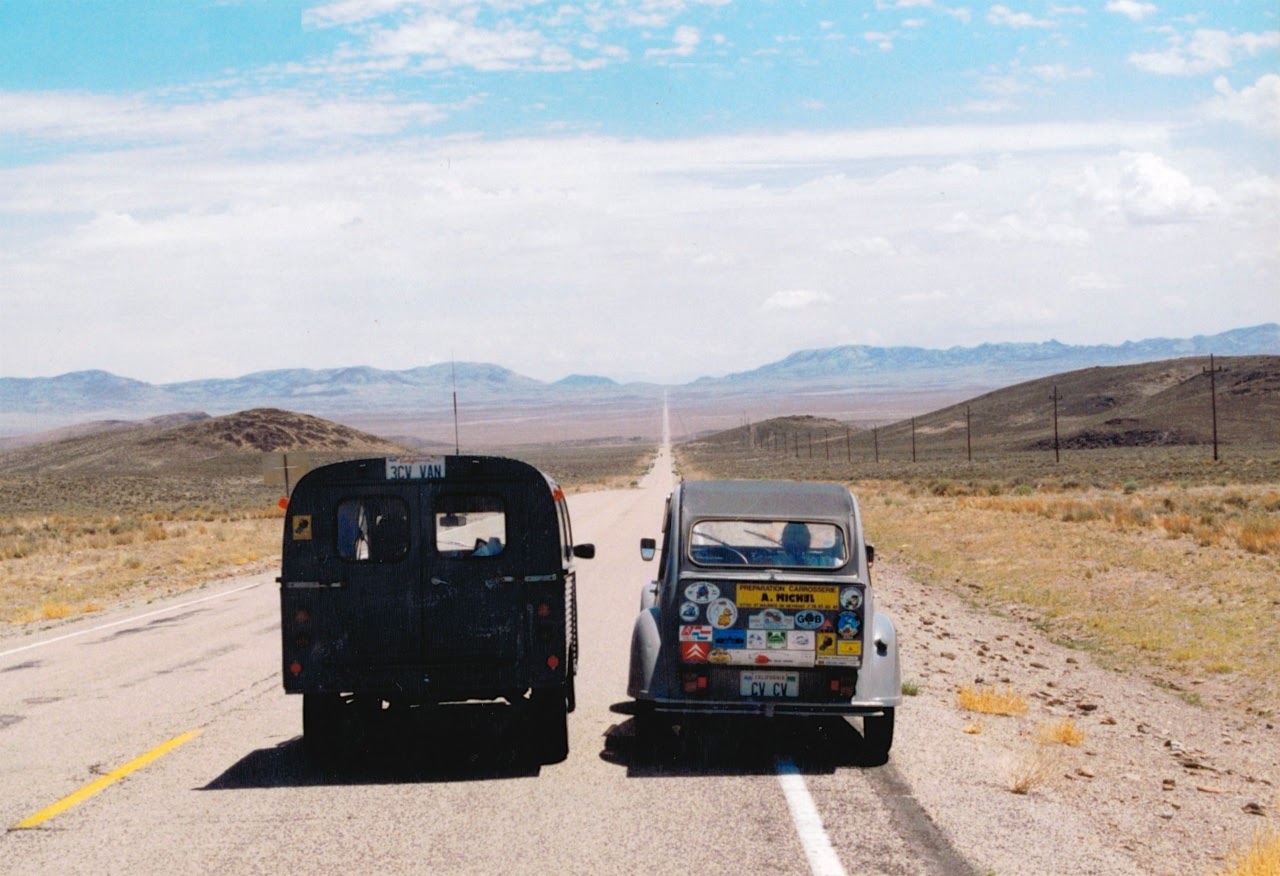
 

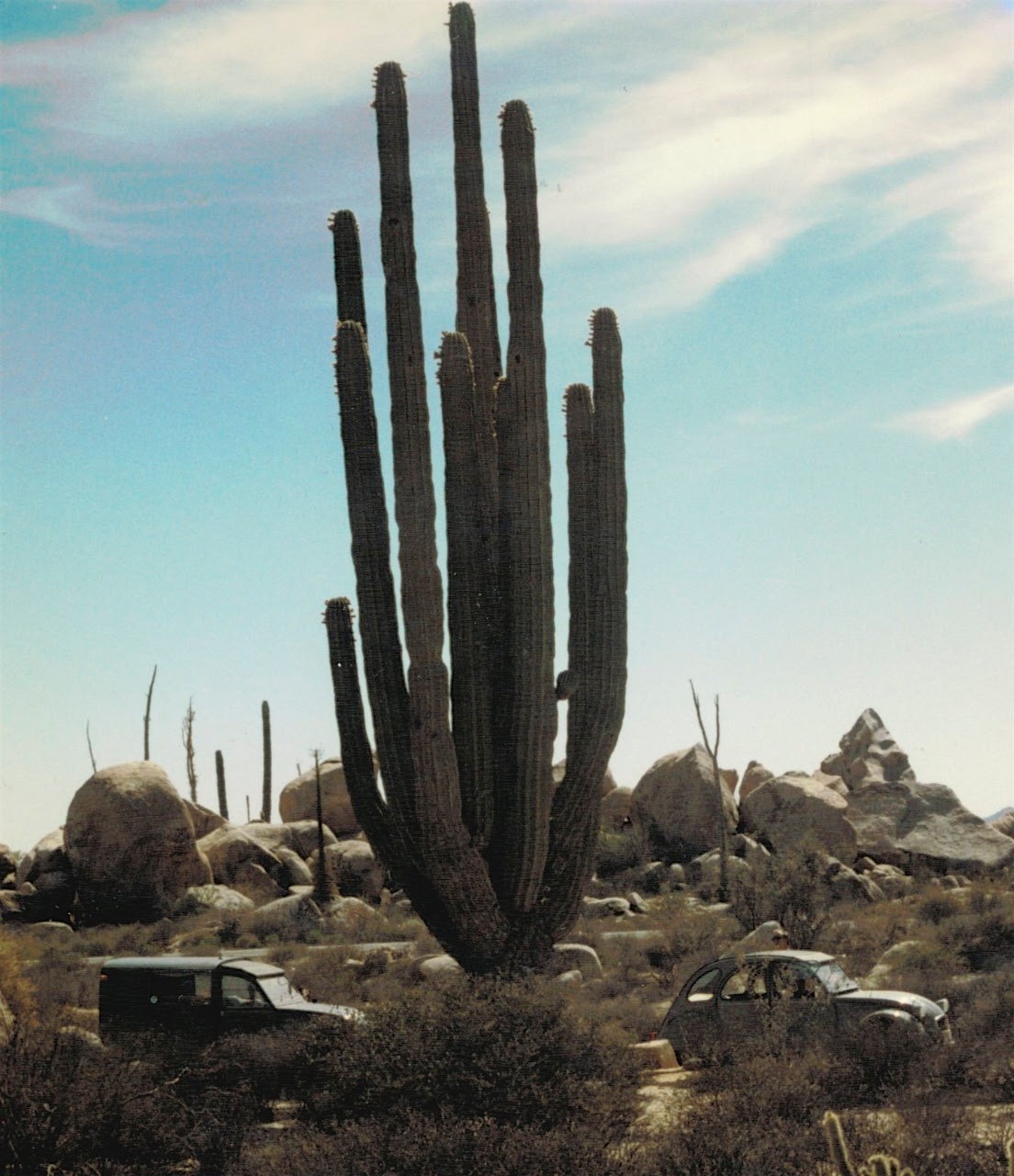
to the middle of Baja California (this is NOT a trick photo)
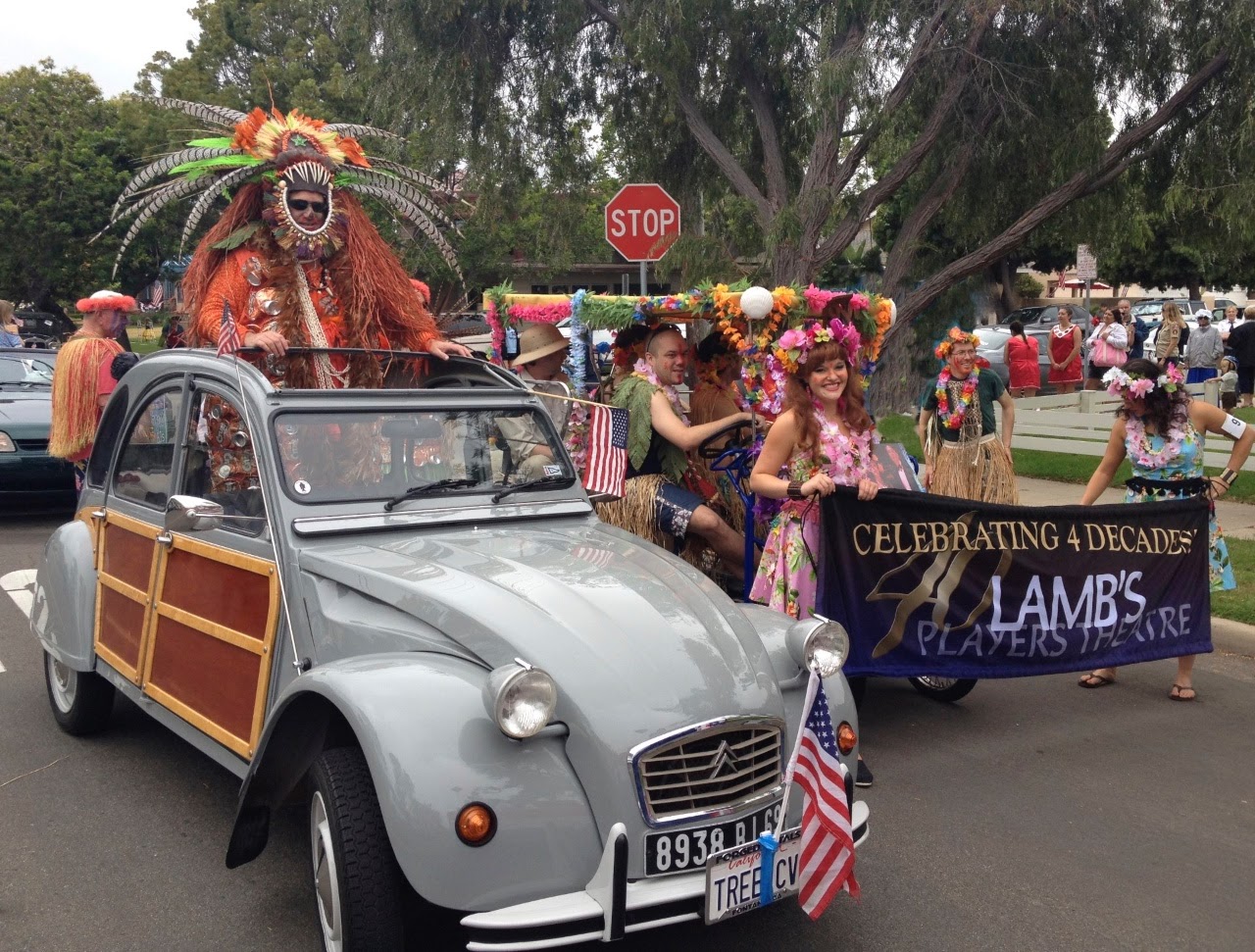
For a brief time it was in the hands of my good friend Gary who put on the wood panels which he'd created for the Flying 2CV (Click Here for that convoluted story). I continued to have access to drive and enjoy it around town and in parades (This was Joe Versus the Volcano if you remember the movie starring Tom Hanks)


When Gary got the car painted, the non-Citroen body shop guys were baffled by the French engineering, and messed up a few things. Gary convinced them to refund some of his money, and he paid me to fix my own (former) car. When he passed away a couple years ago, I got the car back, and have continued to use it lightly. But it hasn't run well, and I was quite frustrated. 

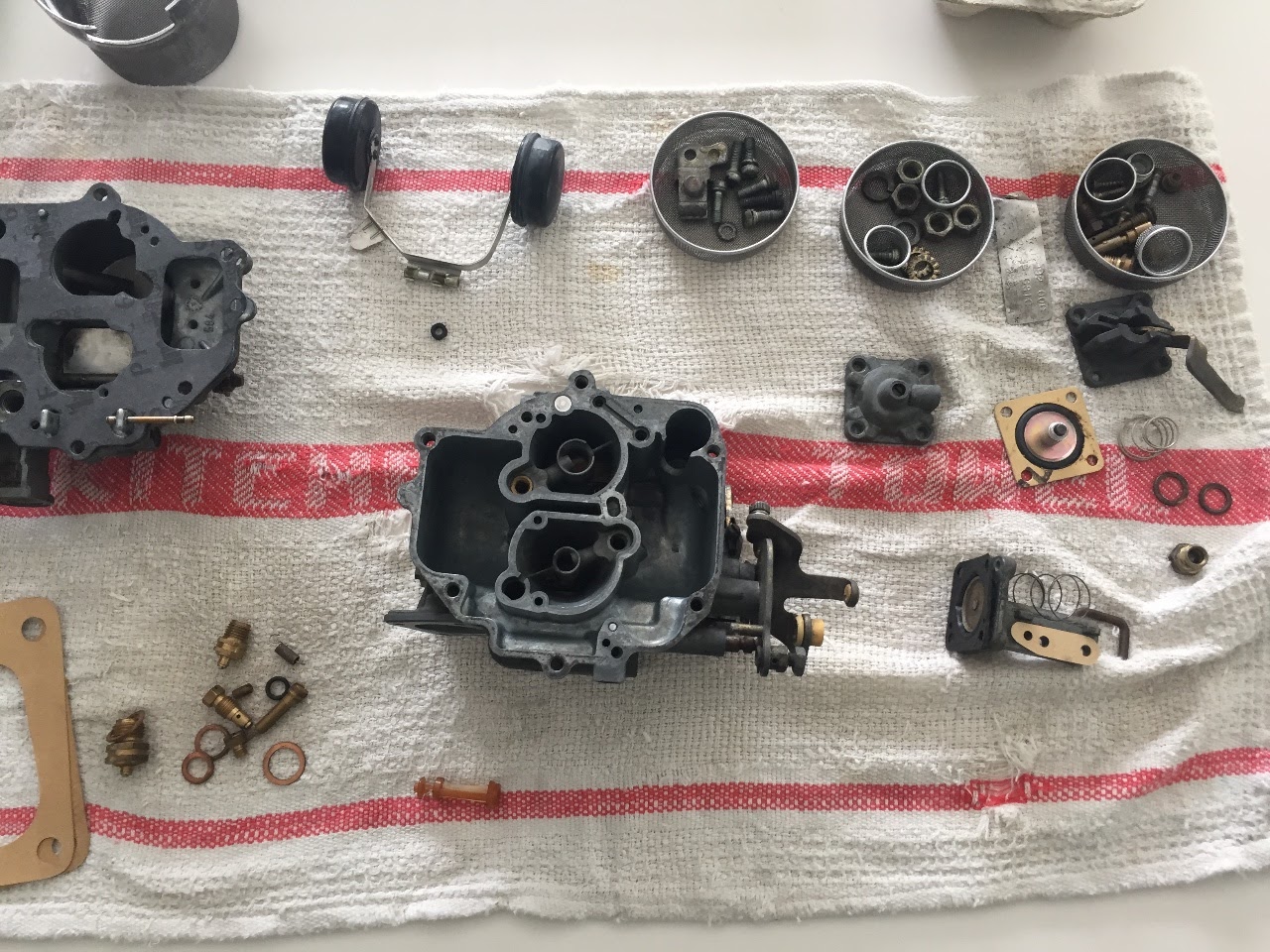
I fixed the wiring, replaced the coil and plug wires, and rebuilt the carburetor. A slight improvement was noted, but nothing significant, considering the effort expended.


There was an issue with the fuel supply to the carb, so I replaced all the rotten and cracked rubber hoses, and tried again. No real improvement.


Darn it! I pulled the tank and cleaned the screen there. Nada. Nyet.
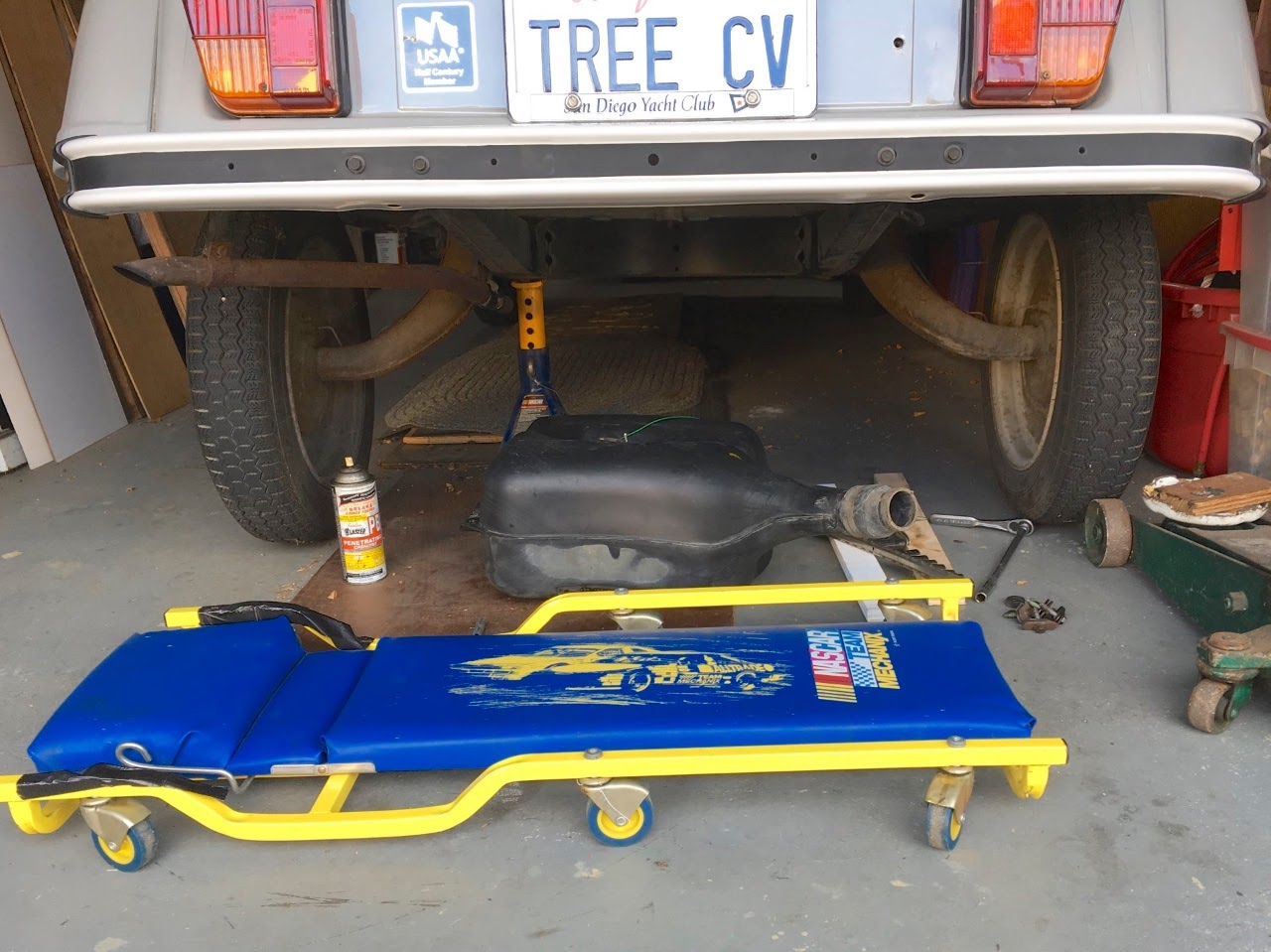

At this point it was feeling like a watch that's been sent back a couple times and not getting better - just getting scratches added to it. Hmmmm. 

Now let me digress. About 15 years ago I had my Lotus Elan Twincam engine rebuilt by Bill Schlossnagel, a well-known racing engine magician in Southern California.
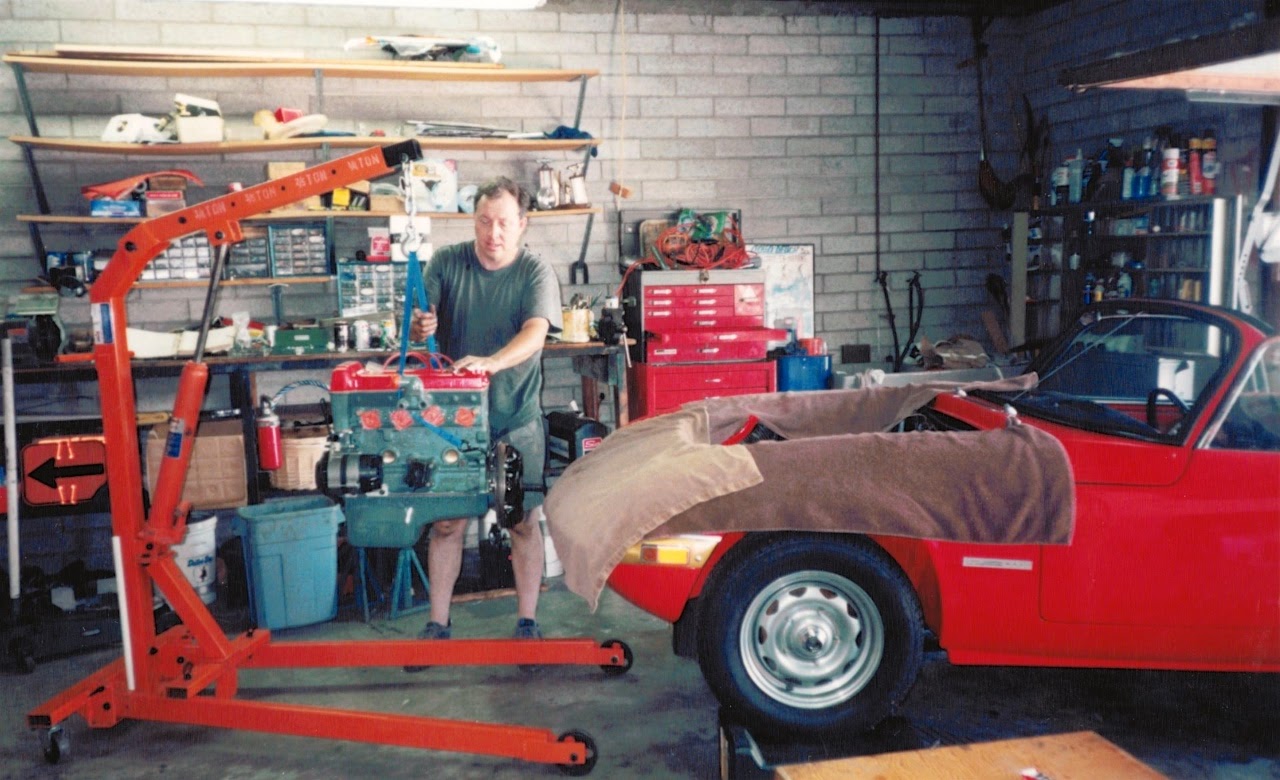


I went to see Bill on Saturday to ask him some questions about tuning my Lotus. We started talking about bad fuel, rotten hoses, and bad running cars. He had an Elan like mine in his shop and said,

"This car's engine is identical to your Elan's engine, and runs just like you have described the 2CV. I think it's fuel - I put it on the dyno and had to jet the carbs about 15-20% richer to run on today's ethanol."

Bingo!

I guess I will have to go deeper into the bowels of the carburetor to solve this problem.

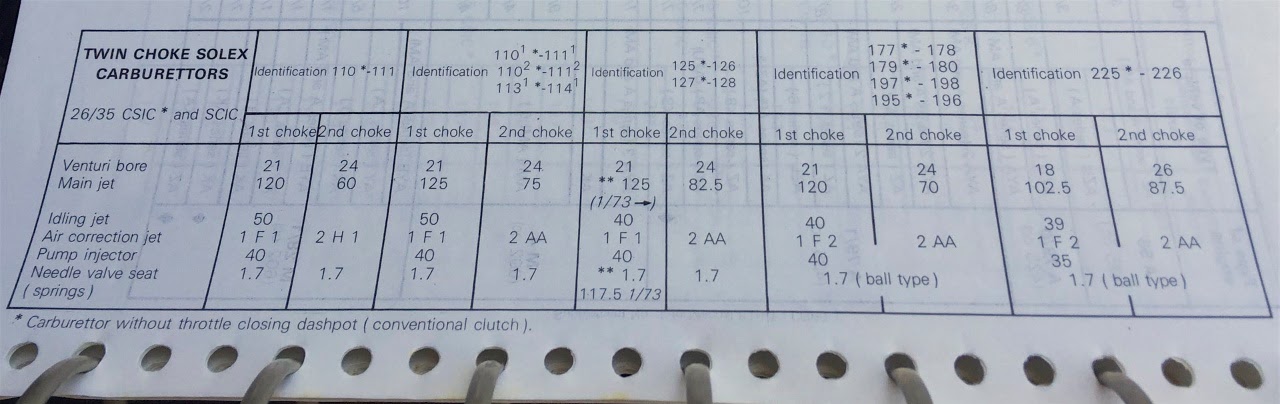
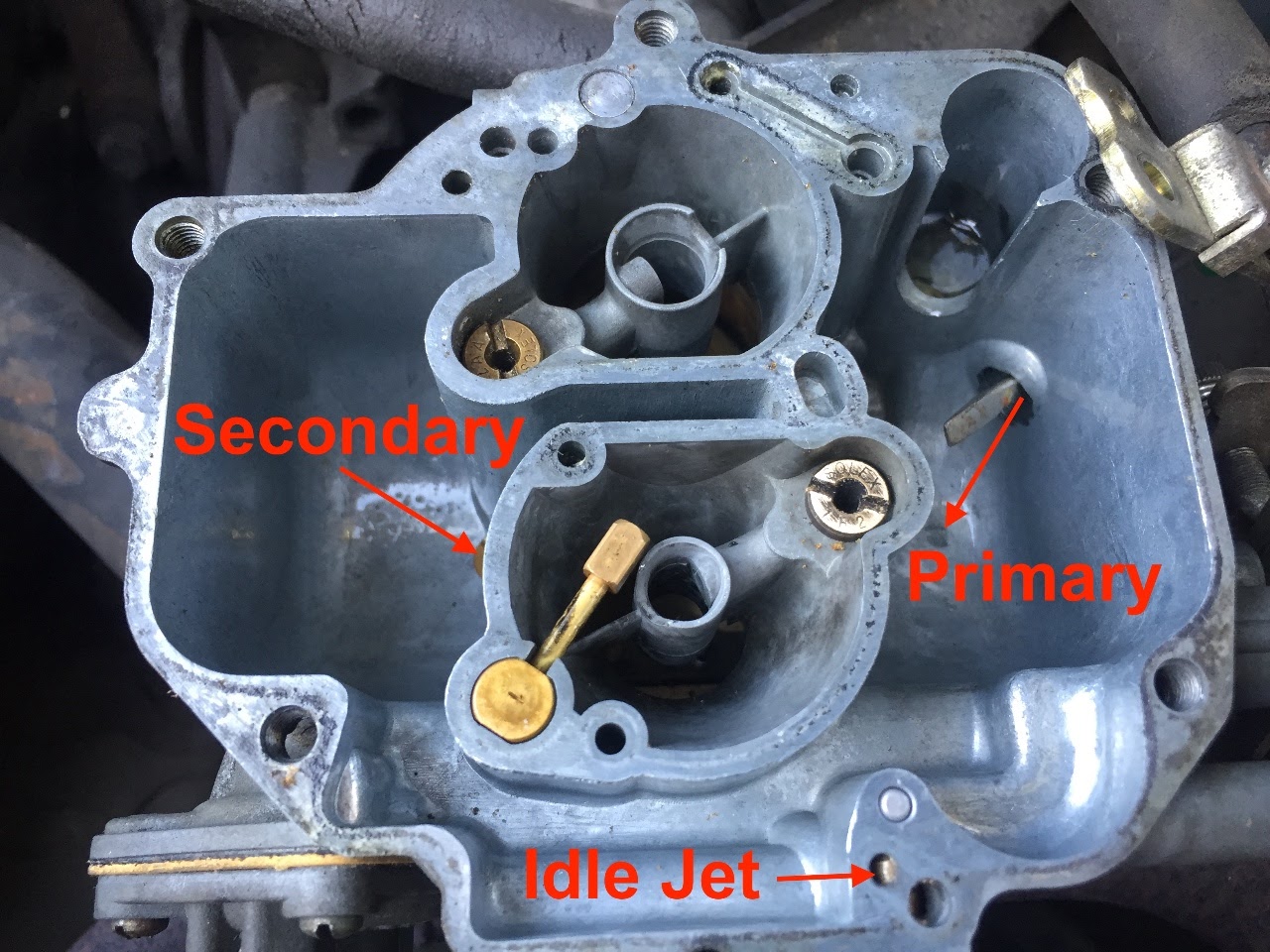
I got out my Citroen factory manual -- the carbs to the left in this table (110,111) are 1970's. As you progress across you see the carb jet sizes going down (leaner) as the cars get newer. My 1986 car has a 225 carb. So do most 2CVs through the end in 1991. In today's world with low octane plus ethanol they just won't run. There are 3 jets I can change - the idle jet, and the main jets for 1st and 2nd venturis / barrels / chokes.


I have two "parts" carburetors plus one on each of my two vehicles. So I pulled and compared the jets in all but the van. With an engine from the Seventies, it still runs well (rich) enough.
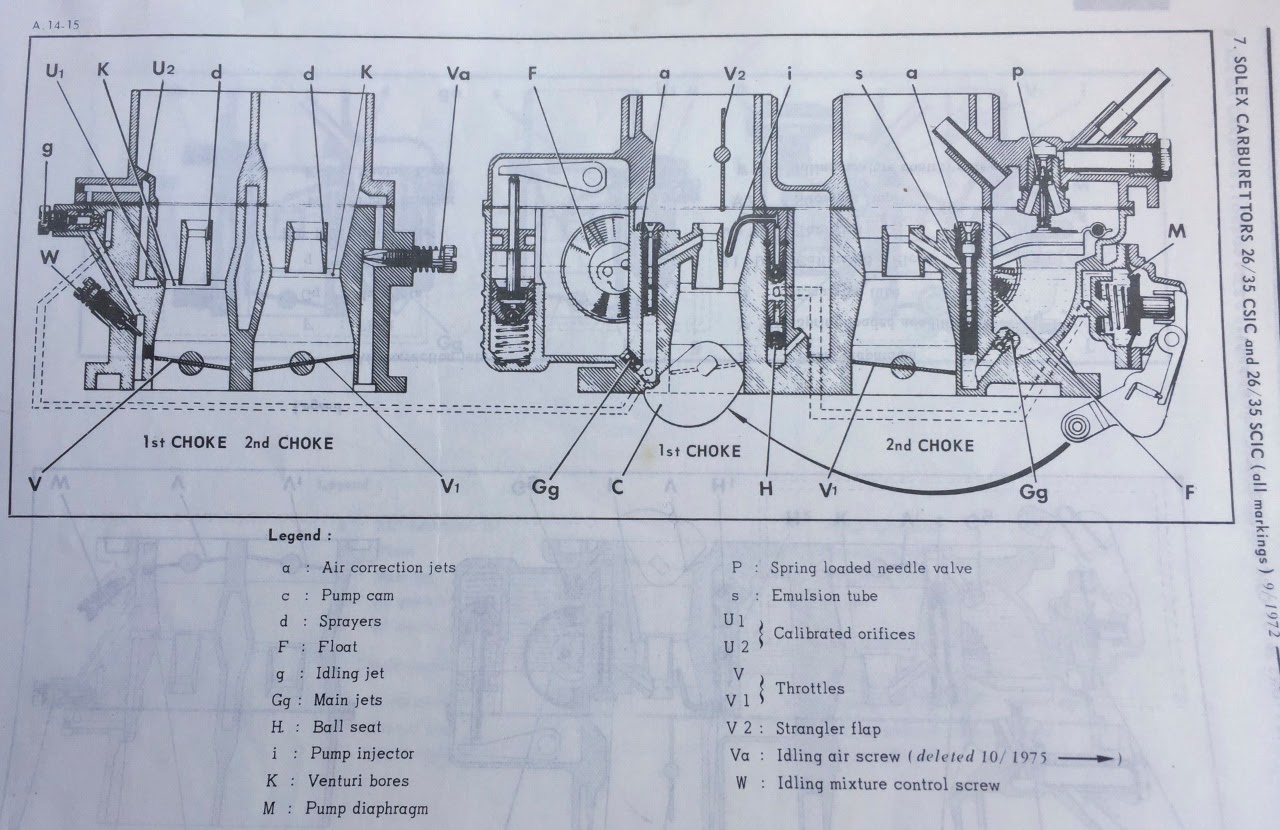


After cleaning and sorting I realized that the "new" jets in my rebuild kit from 2 years ago were even leaner than the ones it was originally built with (of course I kept the old parts, wouldn't you? Every watchmaker should).
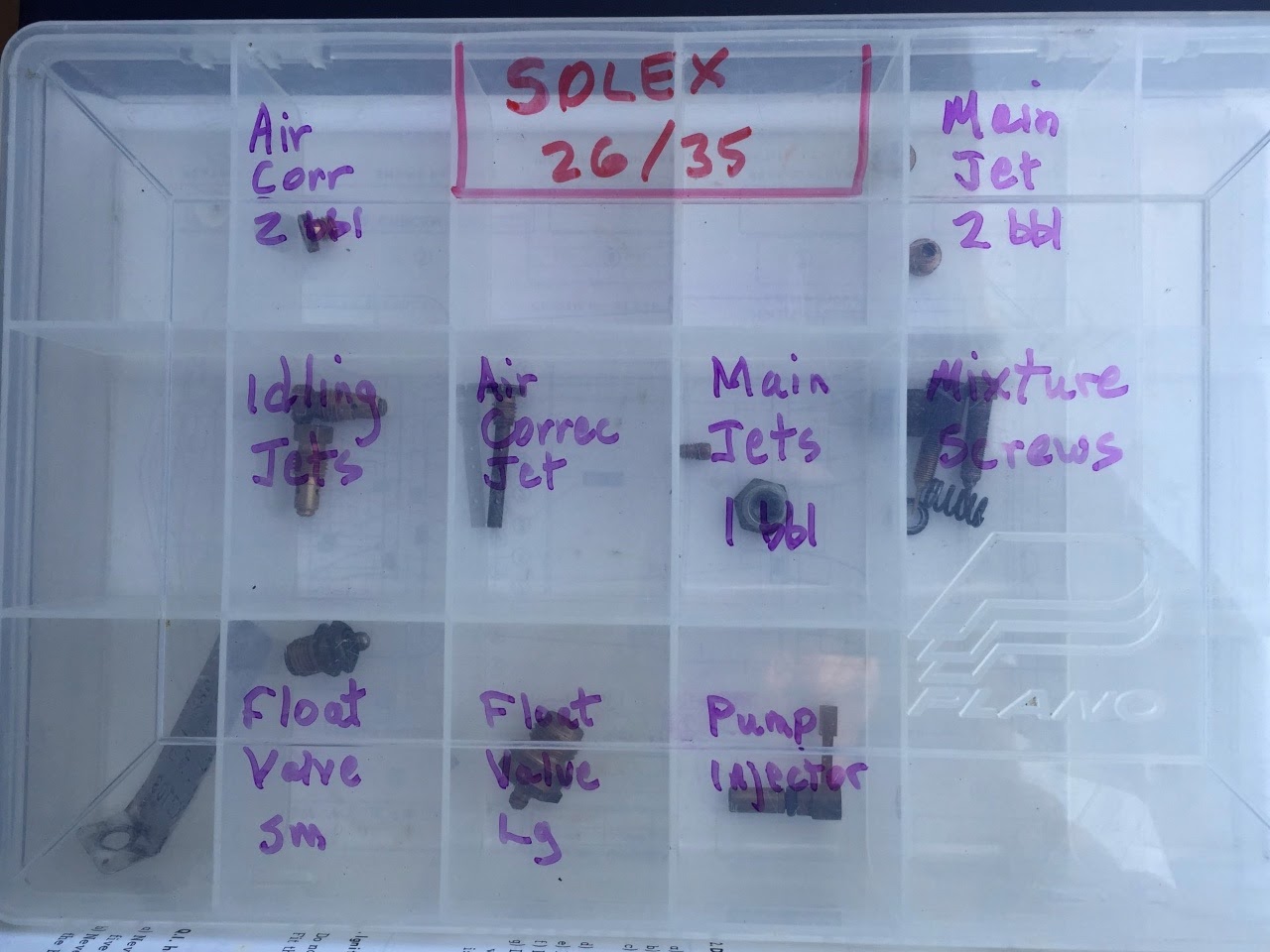


Getting onto the web, I went to the ECAS parts site run by a fellow Citroen nut in Shropshire. As I dug through Roy's inventory of parts I found this listing of Solex carburetor main jets. 


For reference mine existing jets are PRIMARY 102 and SECONDARY 87. The primary 102 seems to have been common and changing up seems to be the rage...


This listing was very helpful as it indicates that people in the UK are also jetting richer for their fuel problems. I could order a box of jets for 30 quid and wait a week or two, or I could think like a watchmaker. Preferring the watchmaker alternative, I went down to my newly-cleaned shop and sorted through a few drills.

For reference, the 3rd smallest drill in my blue tray is the size of my original idle jet. You can see the original jet size (left) and new diameter (right) next to a spring bar for size comparison. They are TINY! No wonder it wouldn't idle. Even a speck of dust would clog it.
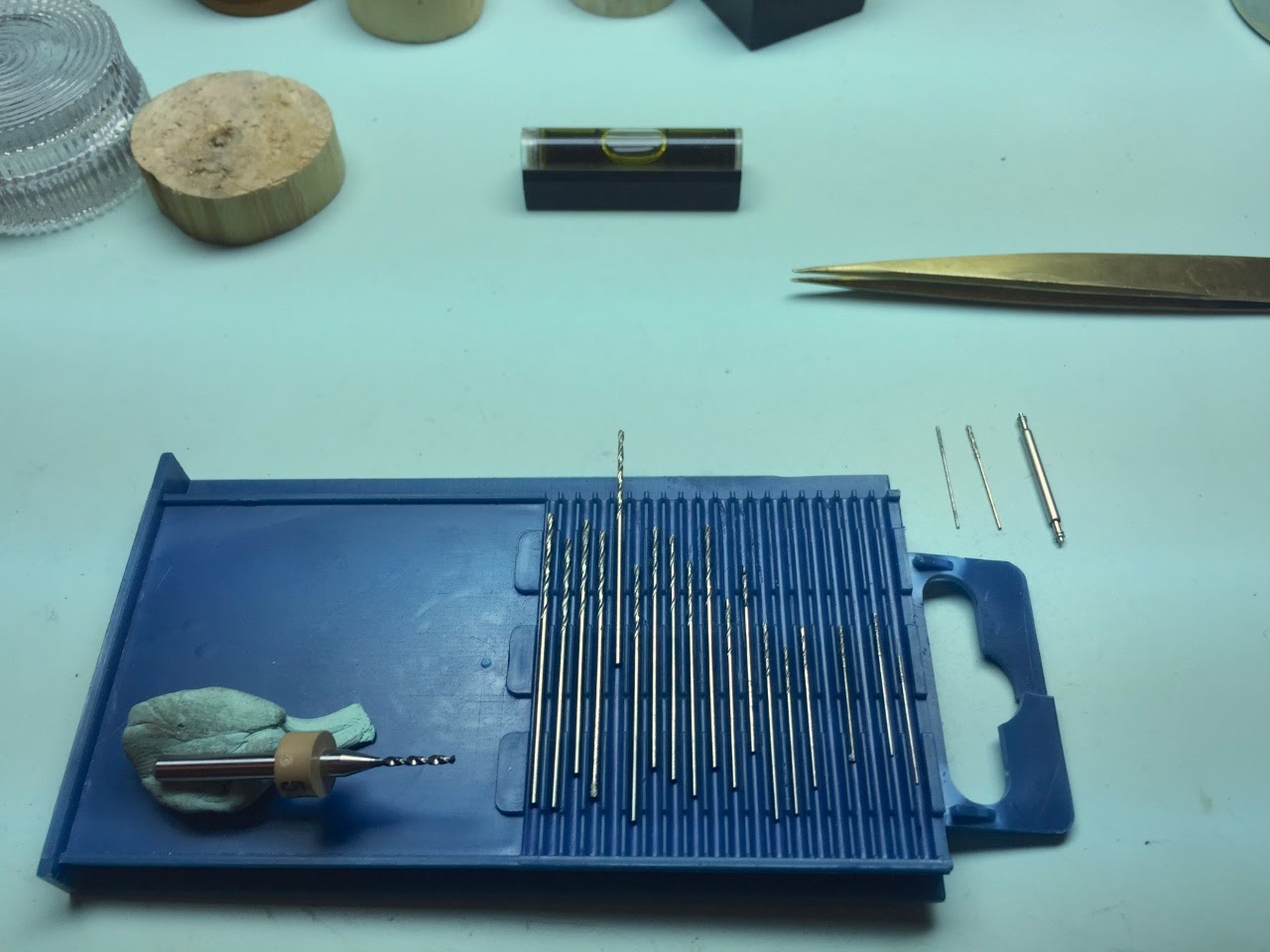
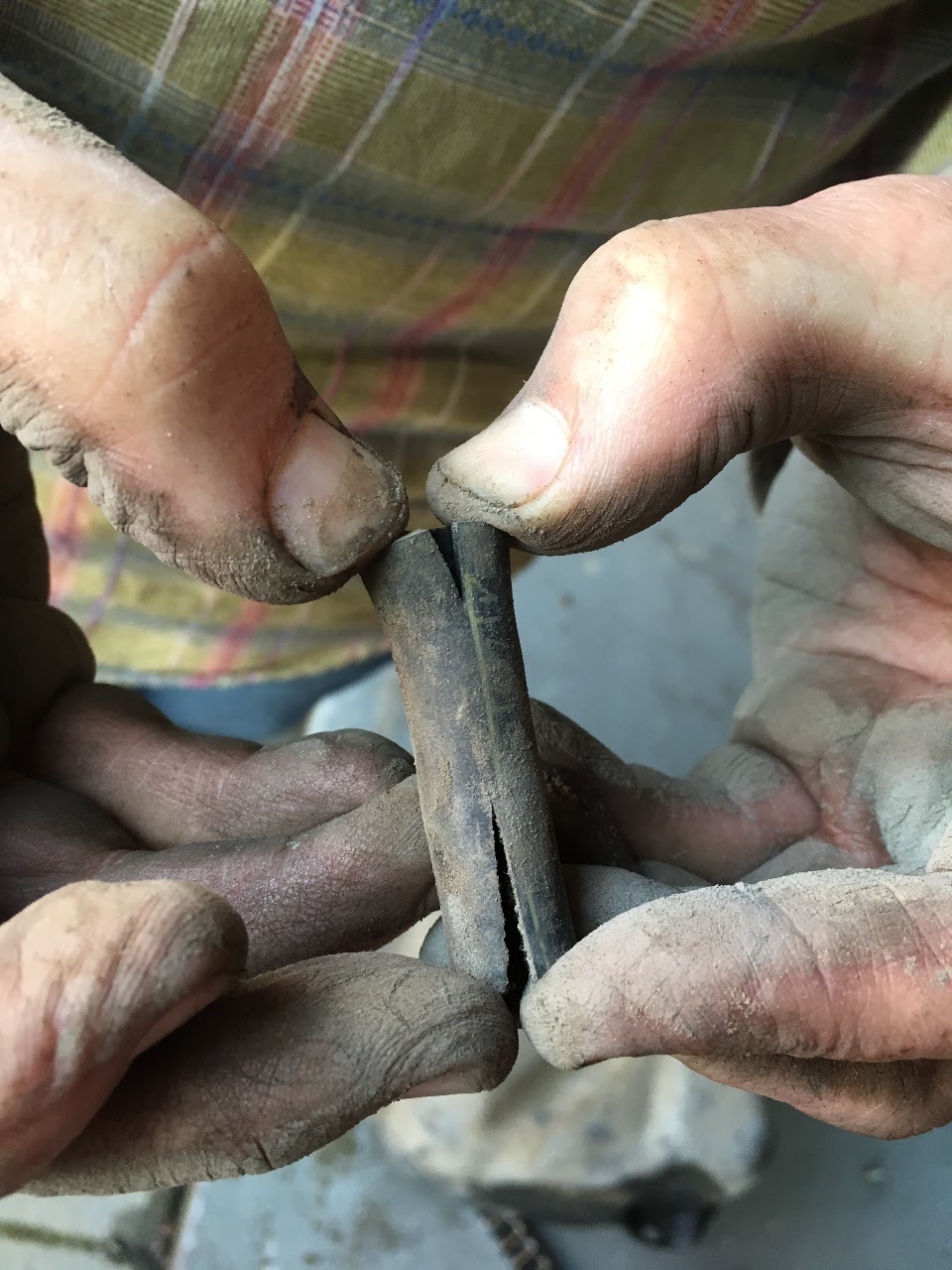
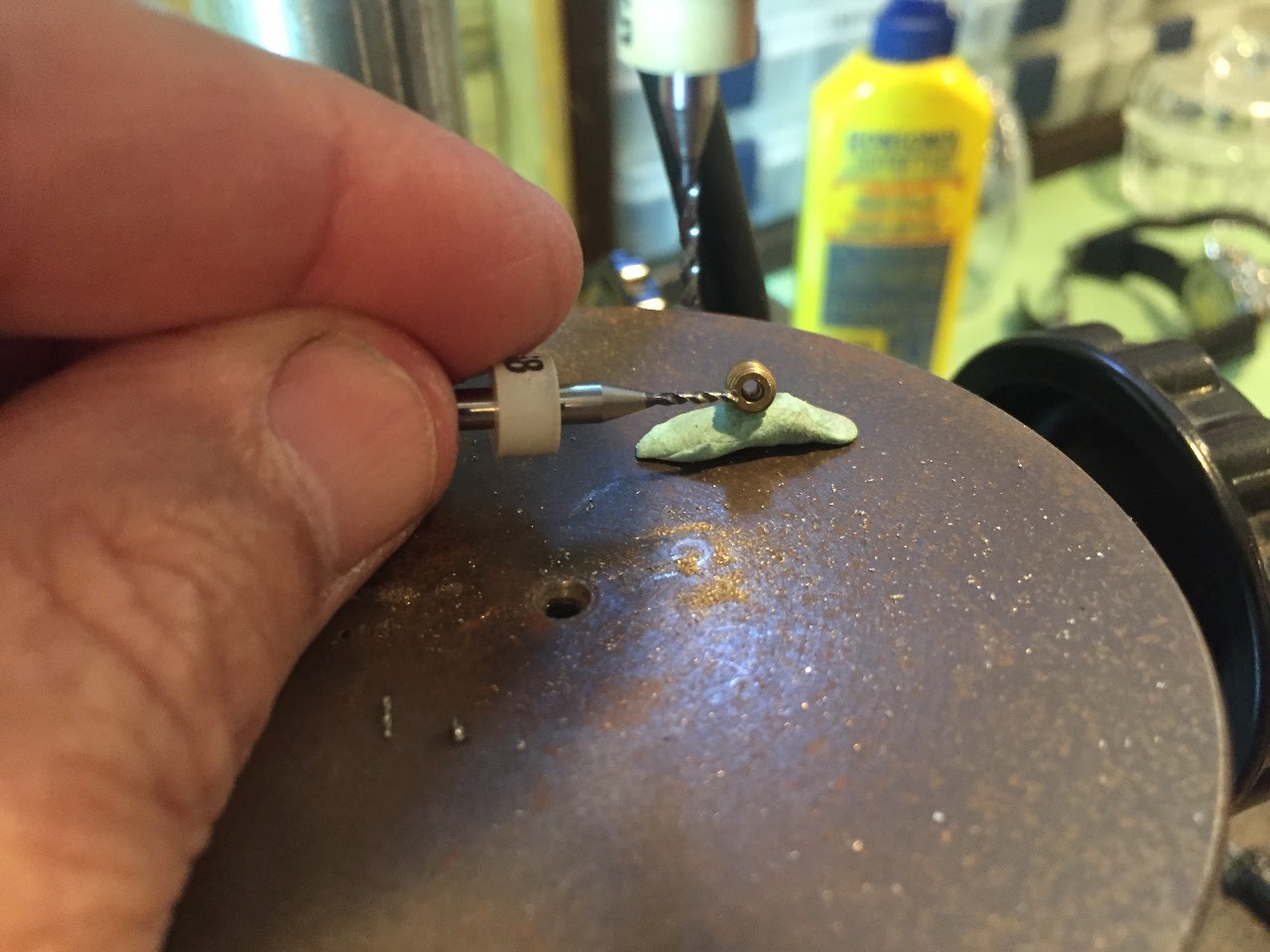
The "enormous" drill in the photo above is the size I decided to go with for the primary jet. You can see the jet below after I bored it out from 102 to 110. (Yes, I broke the tip off the drill bit).


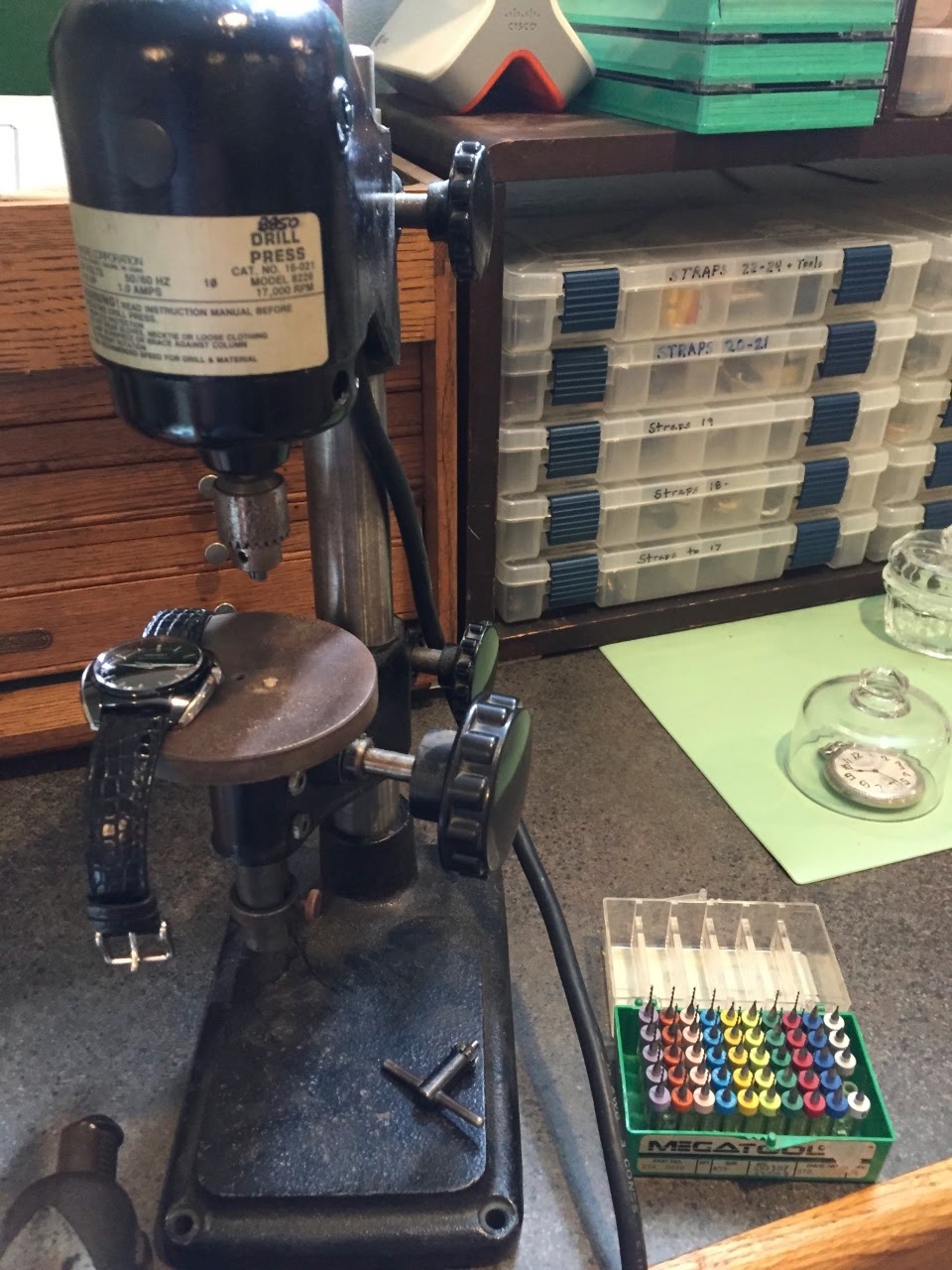
Here's my proper, teeny-tiny drill press with F1 motor capable of 17,000 RPM.


I know you are wanting me to stop rambling and tell you if it works now. 

IT DOES!

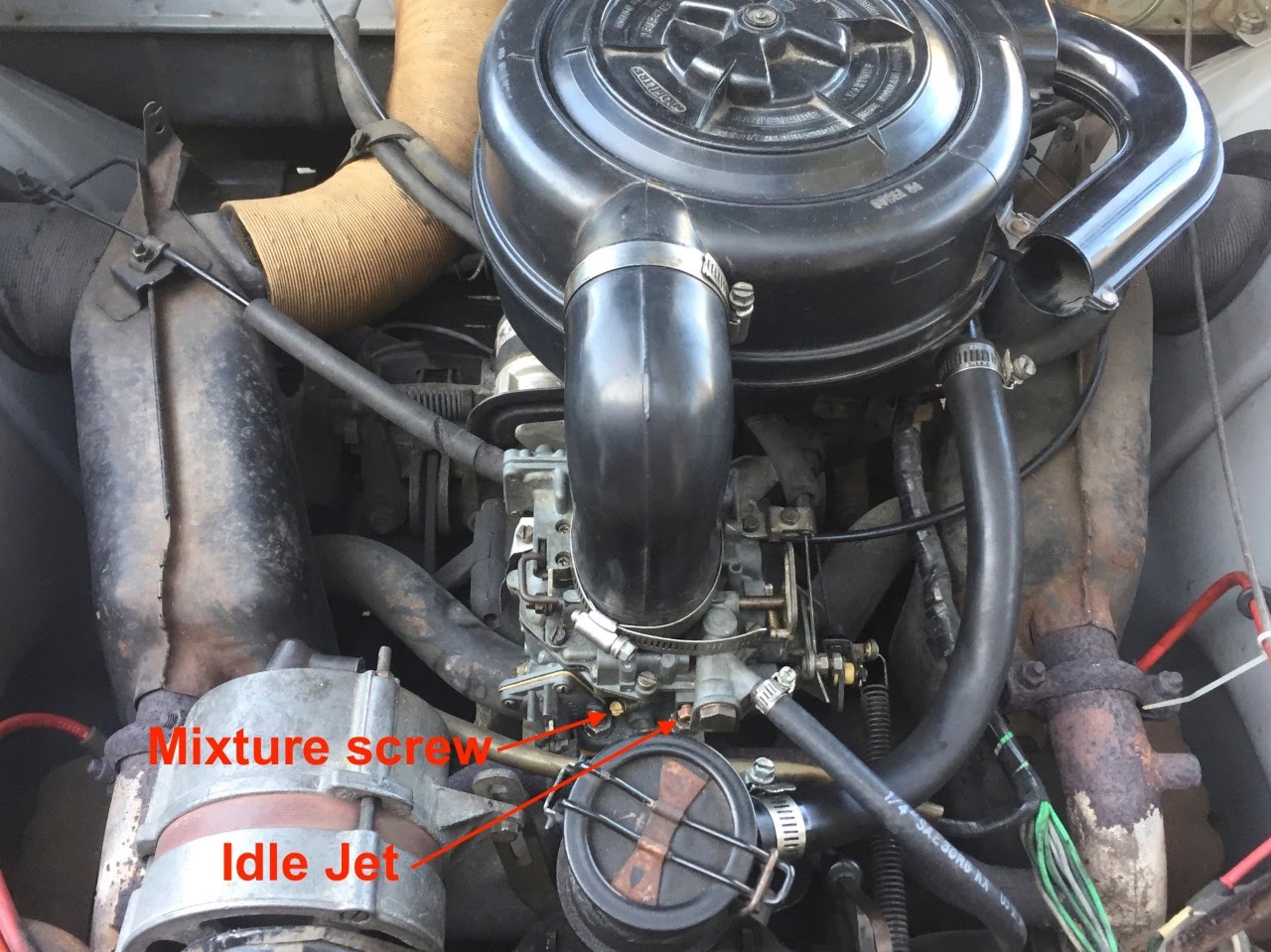
I screwed in the idle jet at the front of the carb. I started the car, tweaked the mixture screw a bit, and it idled as smooth as silk - like it did 30 years ago.
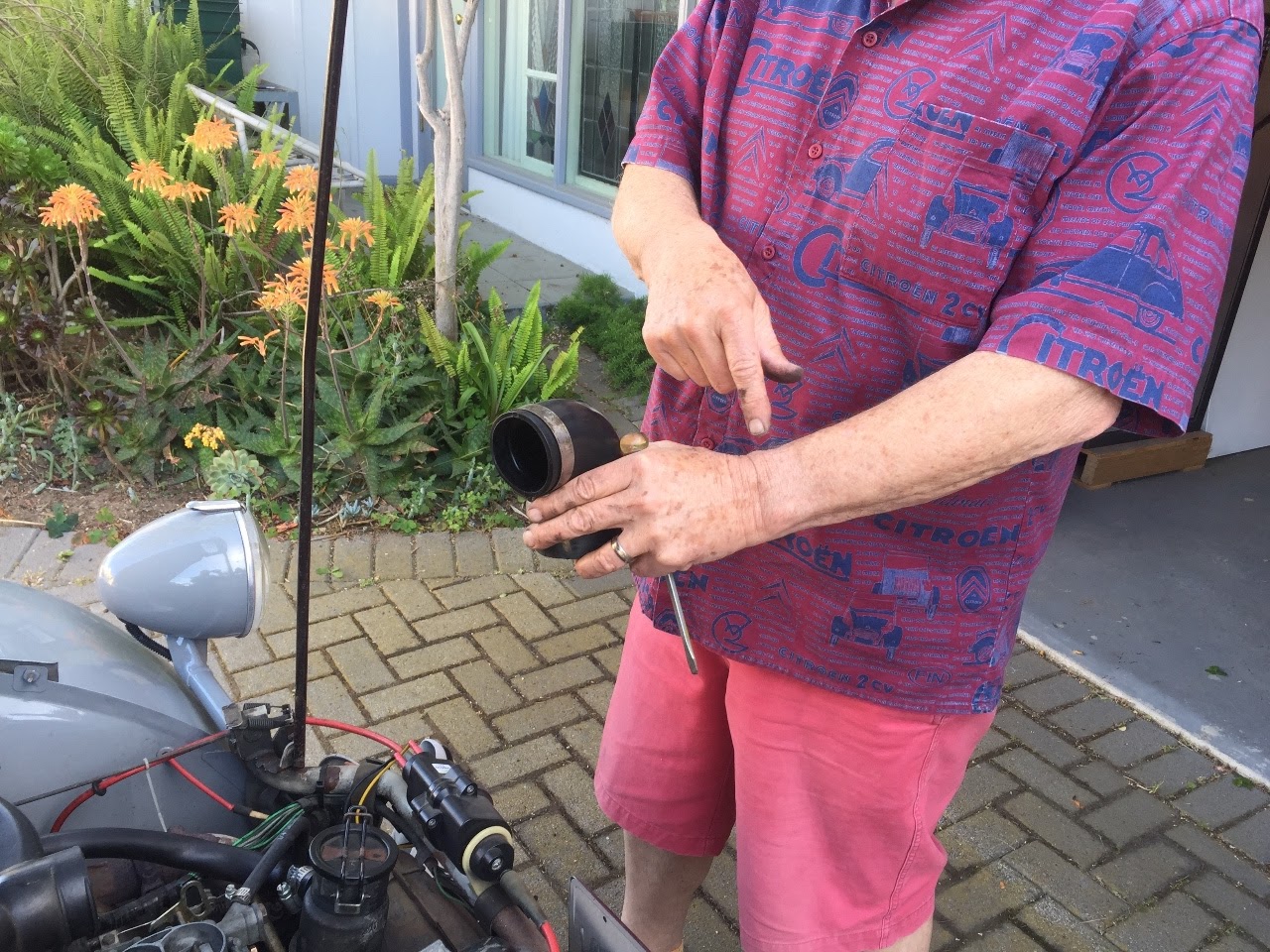
Would the other jets produce some improvement too? They take a bit more work ... I had to remove the top of the carburetor. Notice for safety - no watch.


Extract the fuel, replace the jets -- you can't see the primary jet, but it's in line with my screwdriver tip which is coming through an access hole in the side of the carburetor. Replace the fuel and carb gasket, and reassemble.


About 20 minutes later we went for a test drive, then quickly changed and rushed off to an evening event. The car was FANTASTIC! The Presage Chrono agreed.
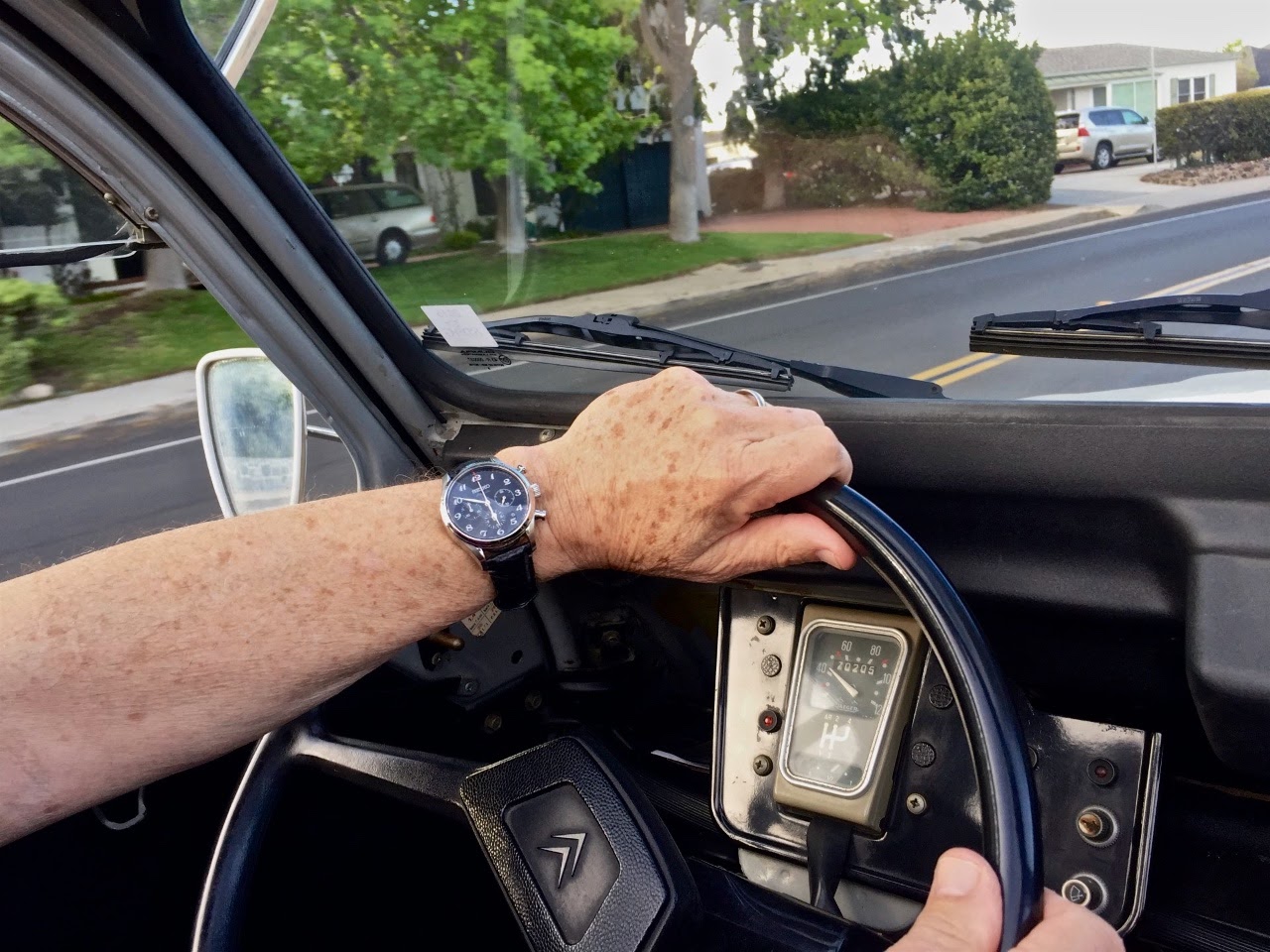


MORE POWER, SMOOTH, RESPONSIVE. WOW! 

Over the Coronado Bridge in 4th geat all the way, and we actually pegged the speedo on the way home last night (ok, I know it's only 125 km/hr but still...)

Thanks Ken B, for the watch factory, drills and mentoring; thanks Bill S for the suggestions; thanks Roy for the data.

Cazalea


The Flying 2CV

THE FLYING 2CV

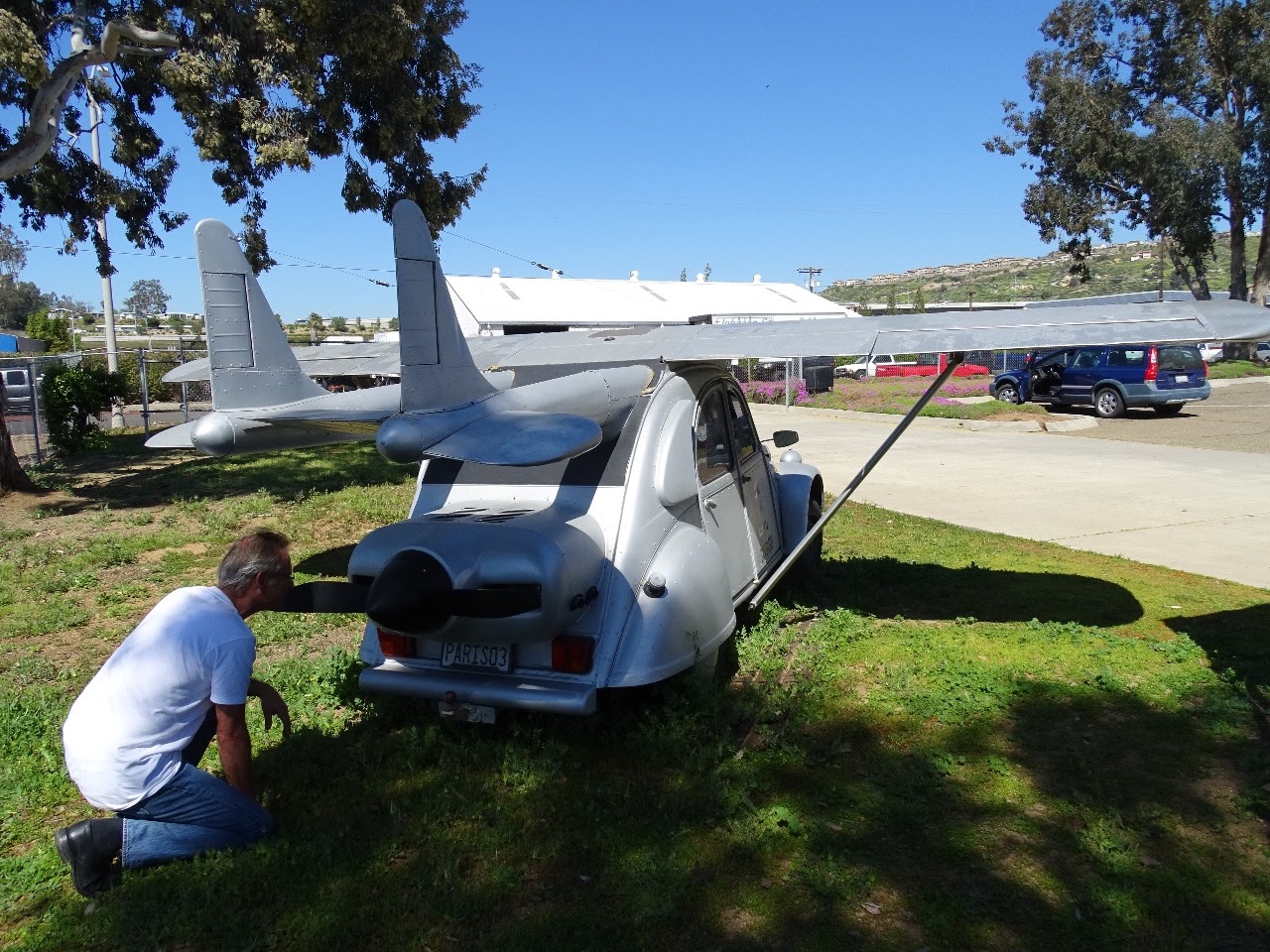
This Flying 2CV was built by Steve Blair and Gary Fraser to attract traffic at the Forged Metals Company's booth at the 1997 Paris Air Show. They said that "more booth traffic" was their motivation. I think more childish emotions were being expressed here.

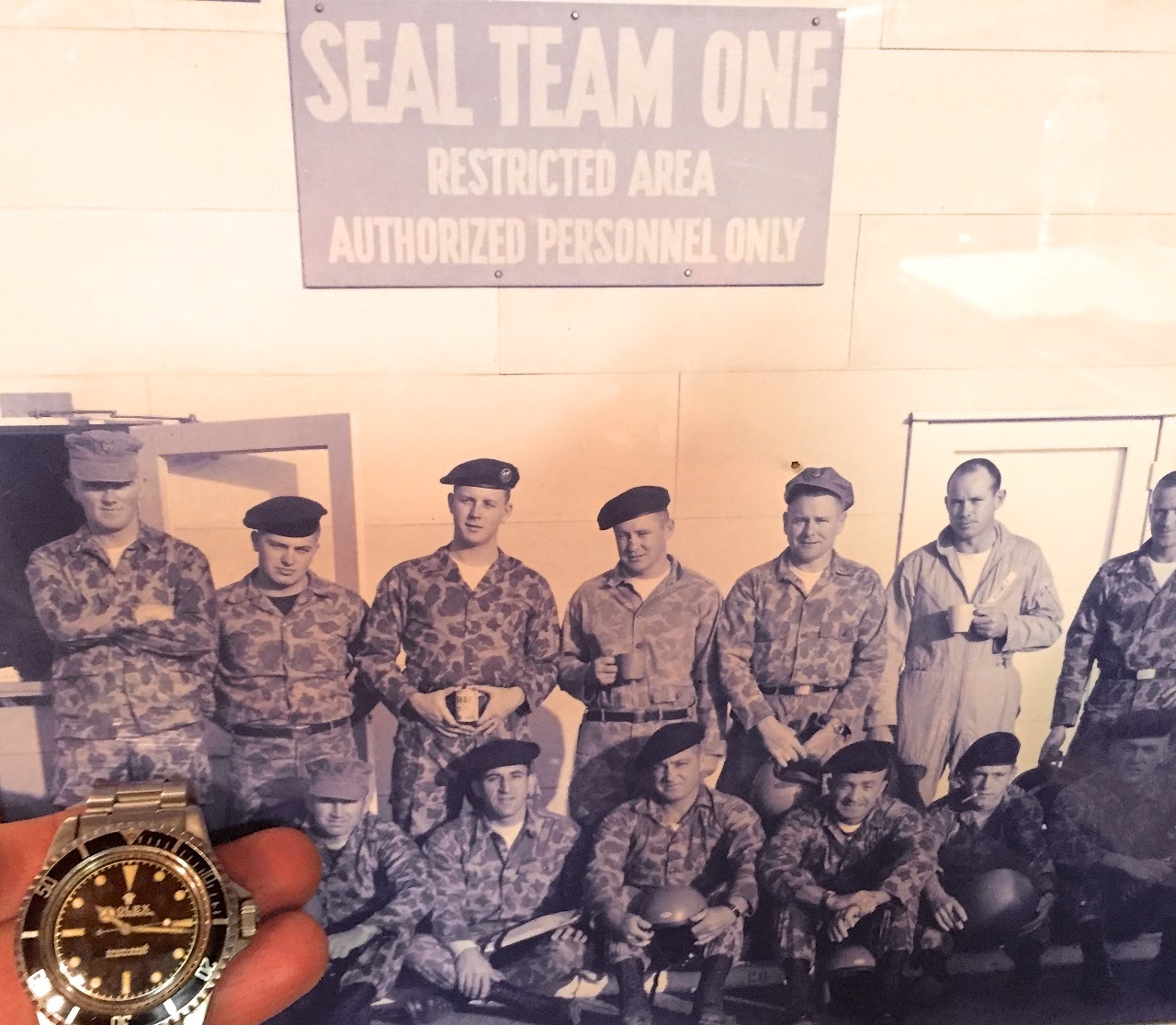
Some of you might make a connection to other posts I have done on Navy SEALS. Gary was my first connection to SEAL Rolexes and Tudors. He's on the far left in this photo, just above the watch.


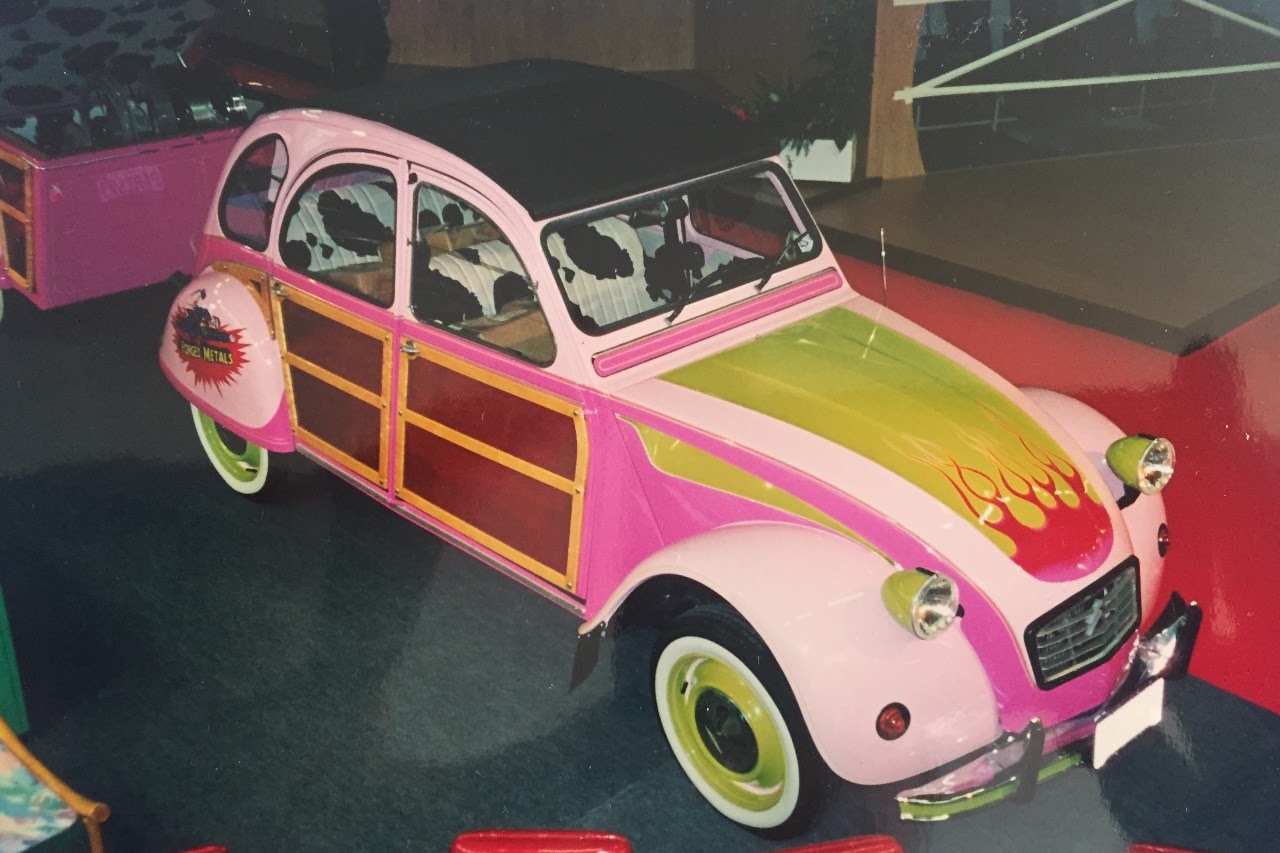
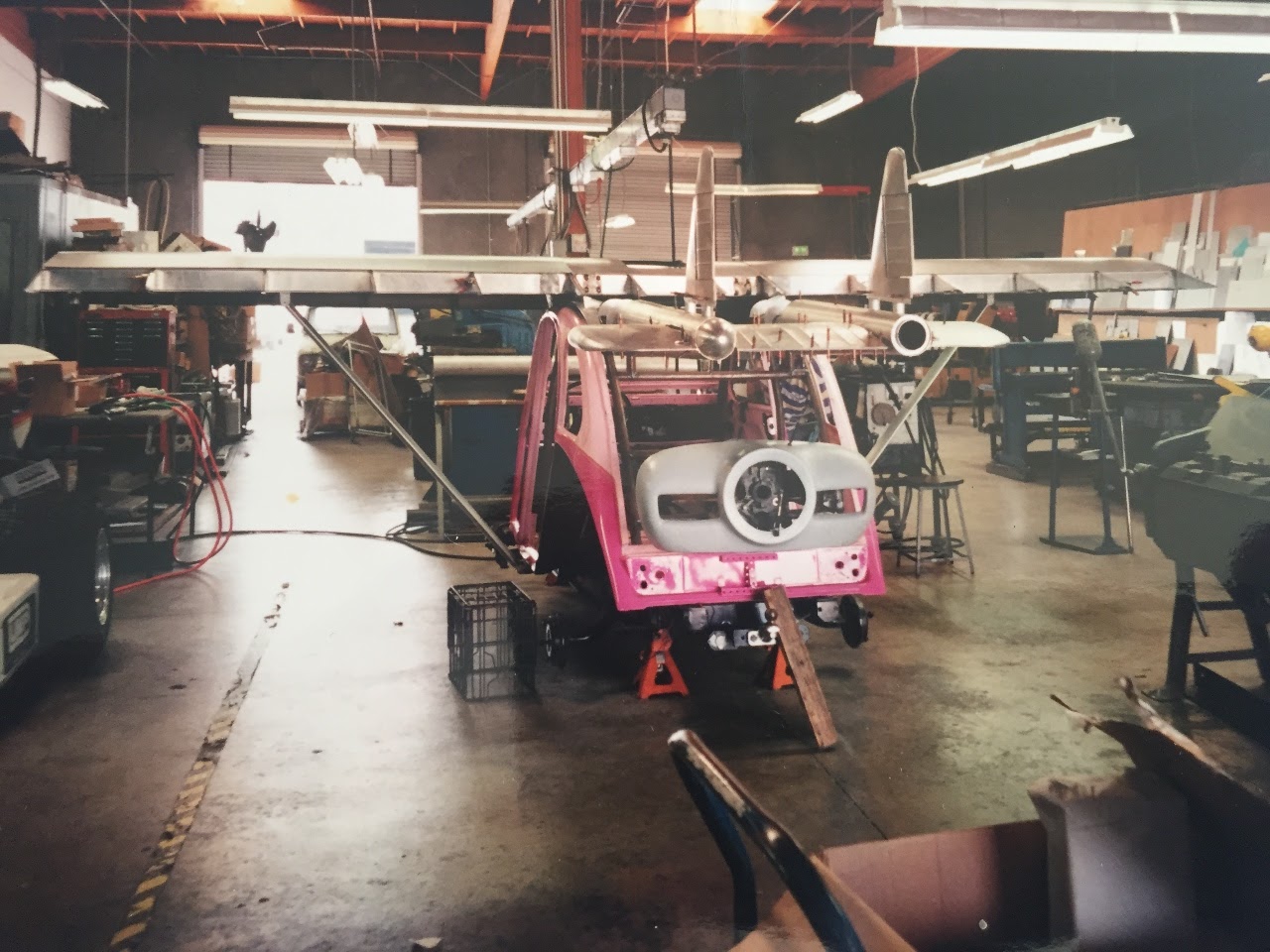
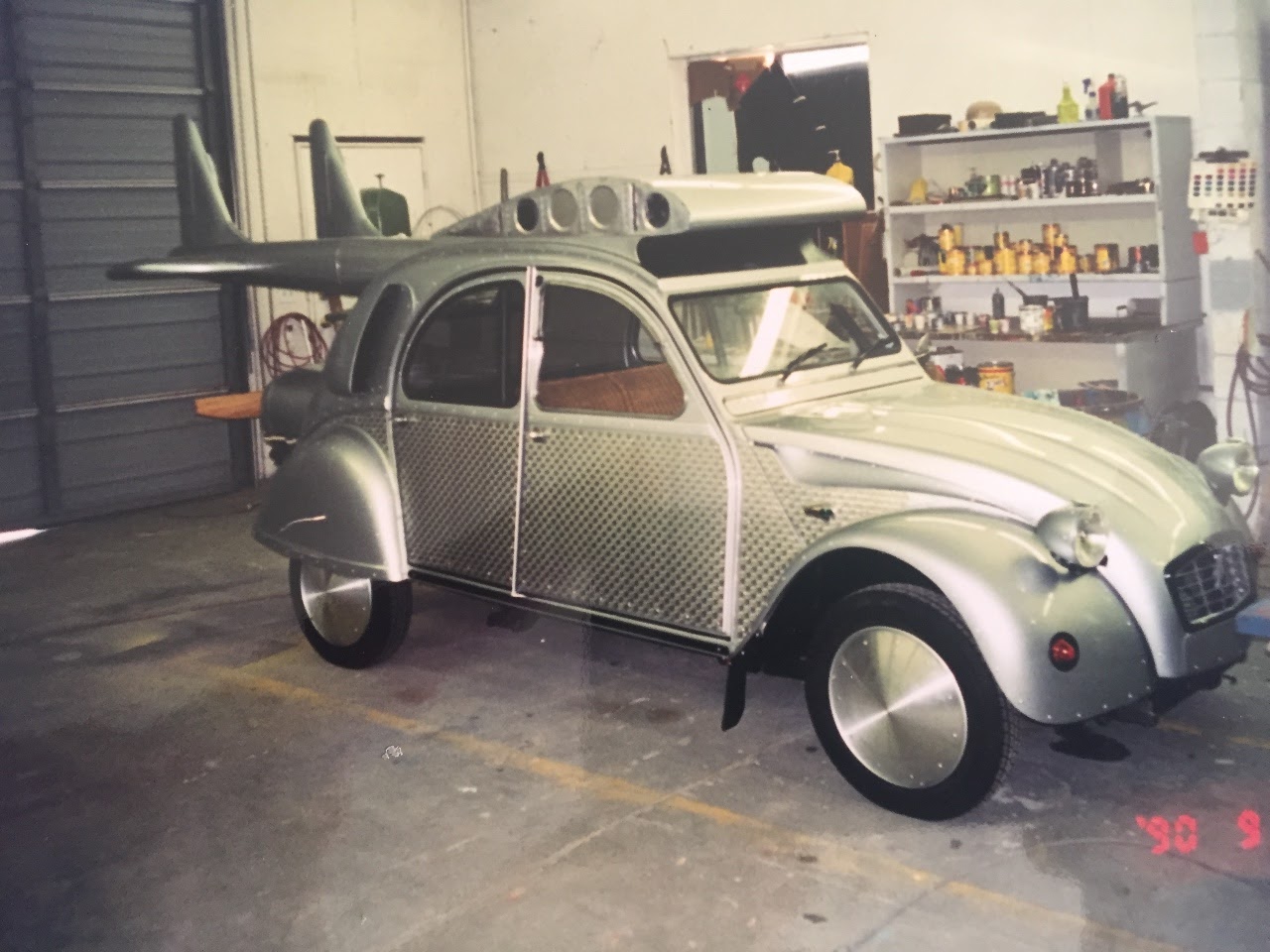
To get the full picture we go back to about 1996. Here’s the first photo of the first car, while its fabrication was just starting. Remember this was in California. They had a particular vision in mind that expressed America / Freedom / Beach Boys / Surf / We Can Do Anything.

In its first version the original Forged Metals Booth Display 2CV was just showing off Forged Metals' capabilities and sense of humor. It was  a gaudy “hot rod” kind of thing and didn’t have wings or pretend to fly.


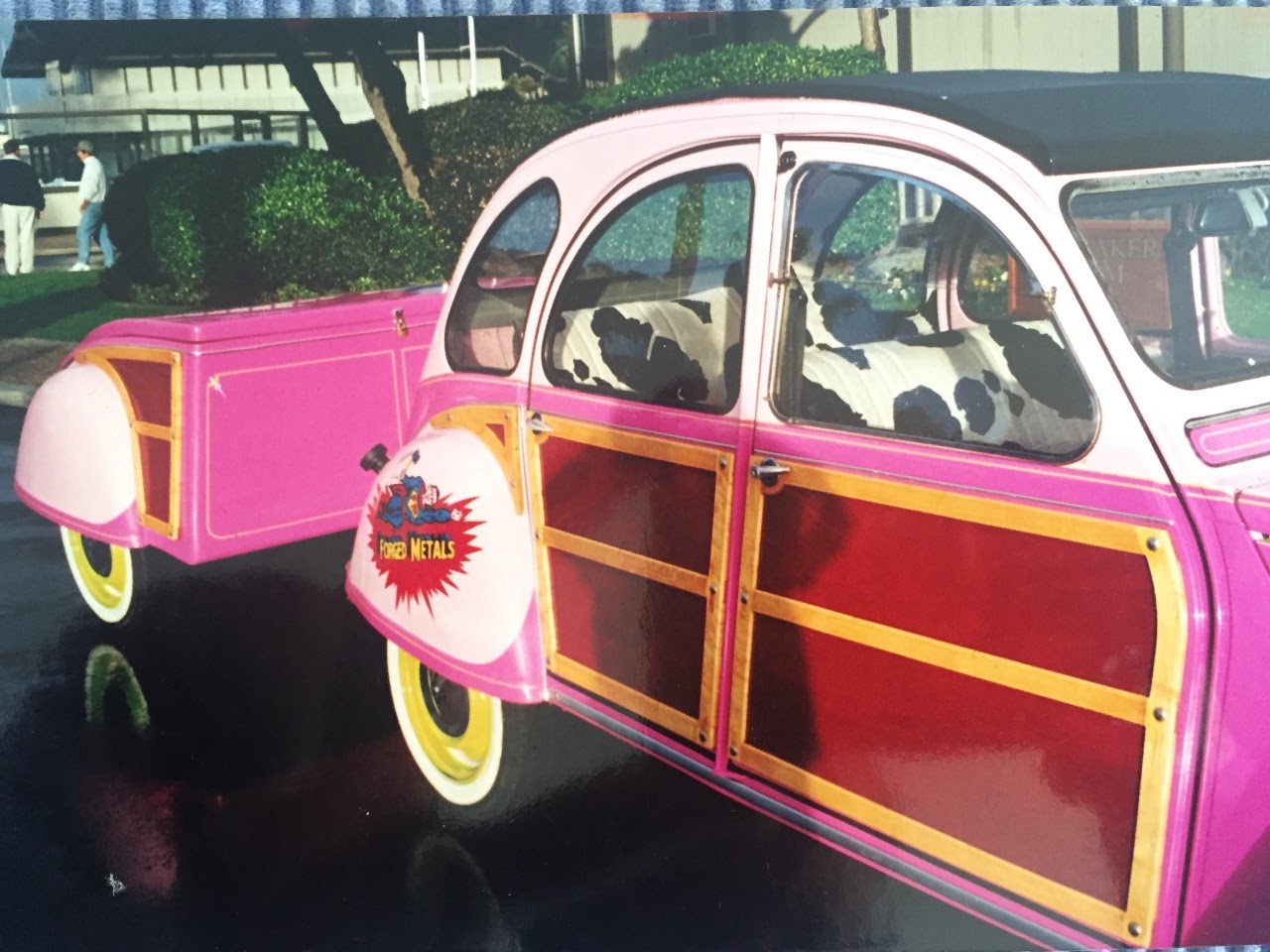
It did have a trailer with a cocktail bar inside. The upholstery was “cowhide" and you can see on the rear wing a painting of Forged Metals man (he could fly).


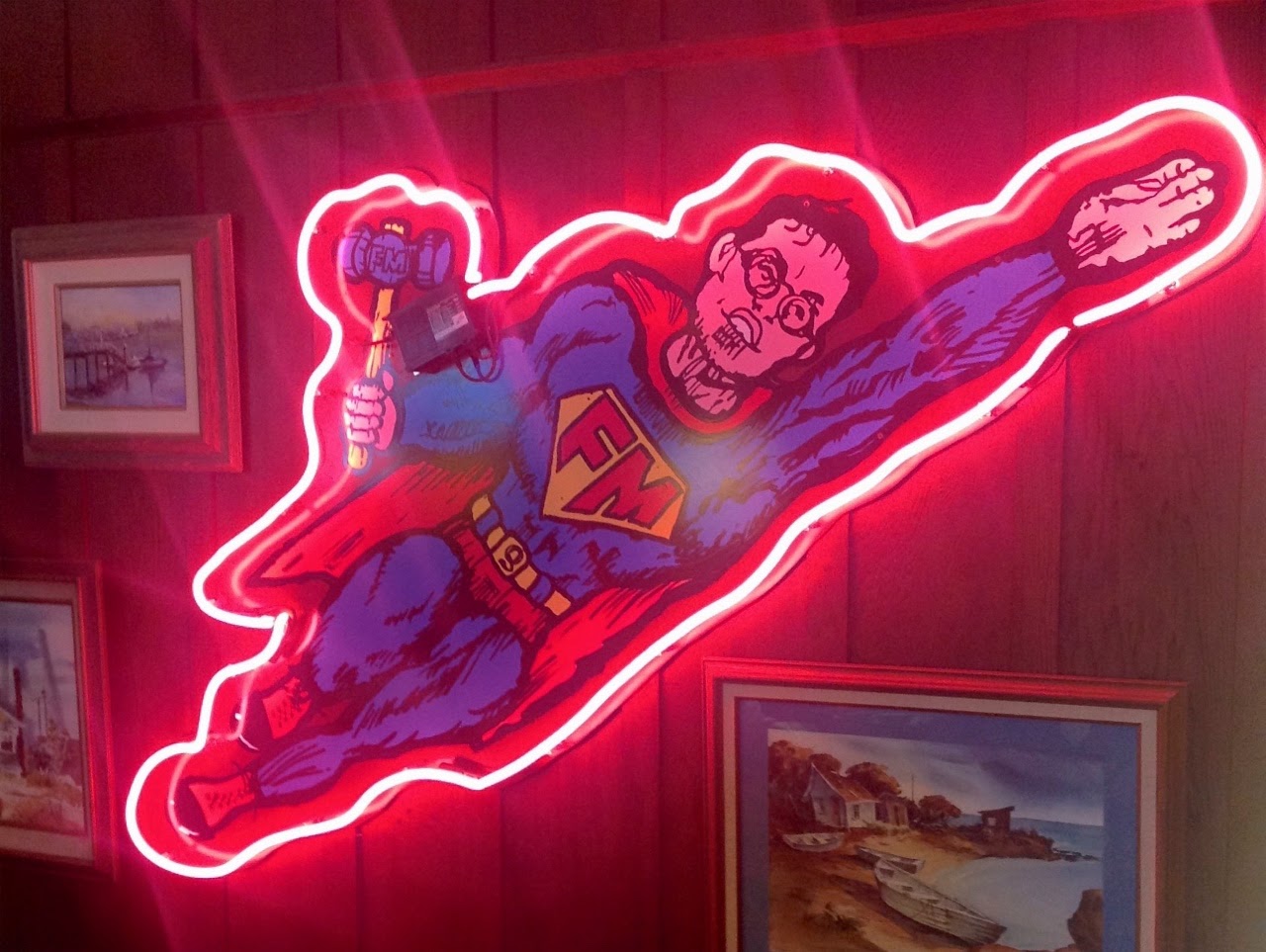
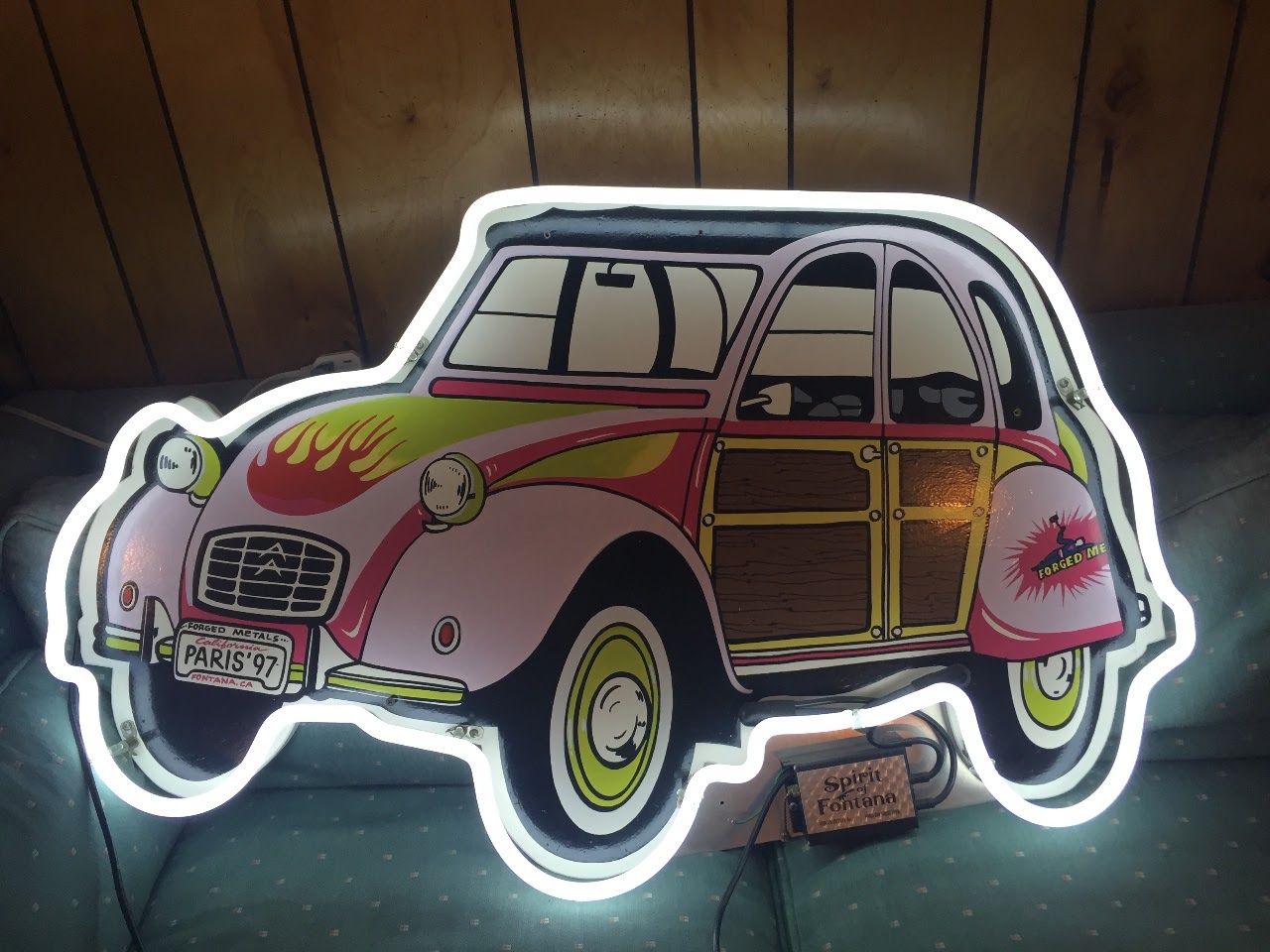
Here's Forged Metal Man's neon sign (Gary made him)


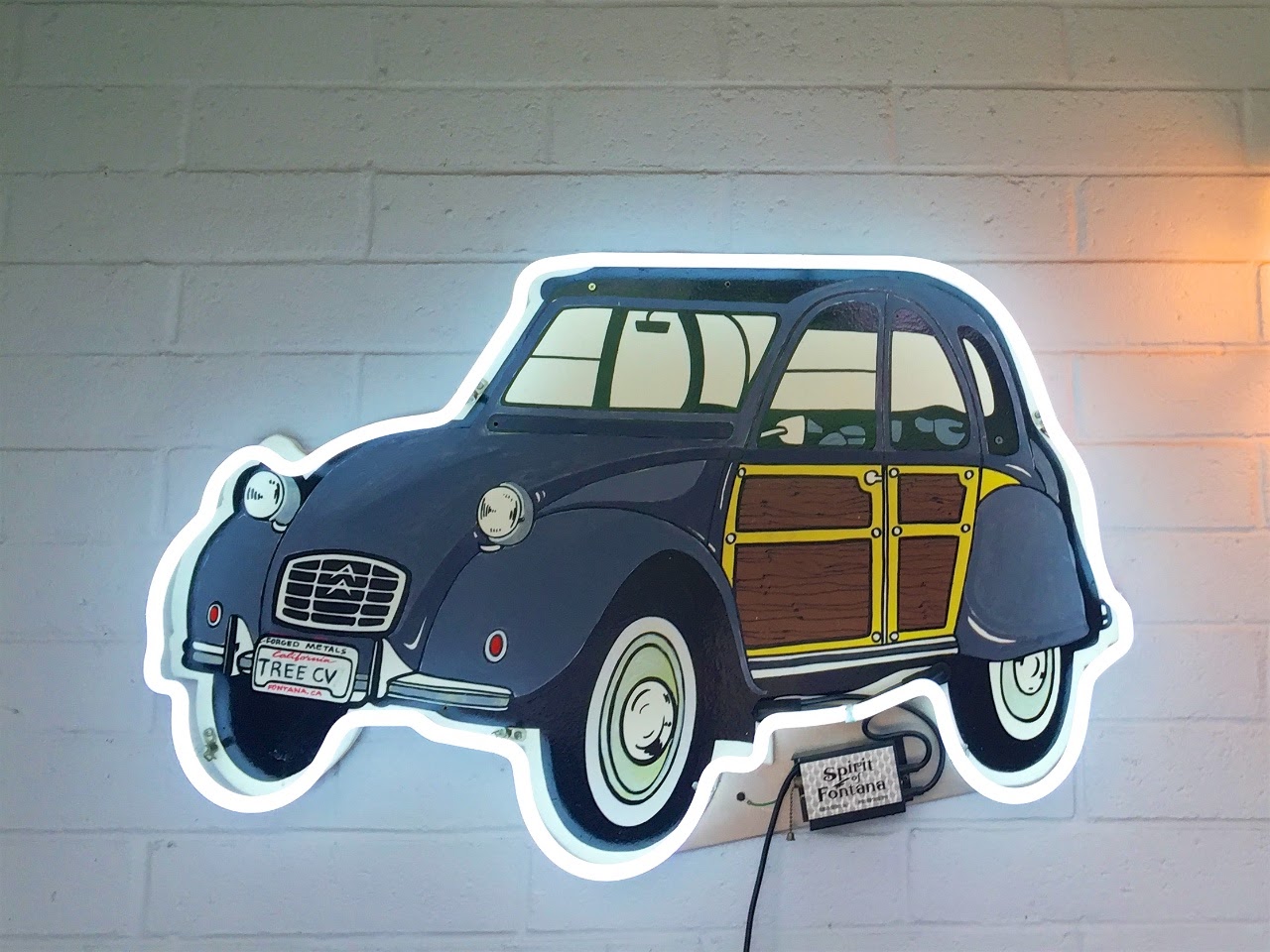
A little more booth eye candy - the 2CV's neon sign:


Two years later Forged Metals, following Gary's design, turned the hot rod Woodie 2CV into the flying 2CV.


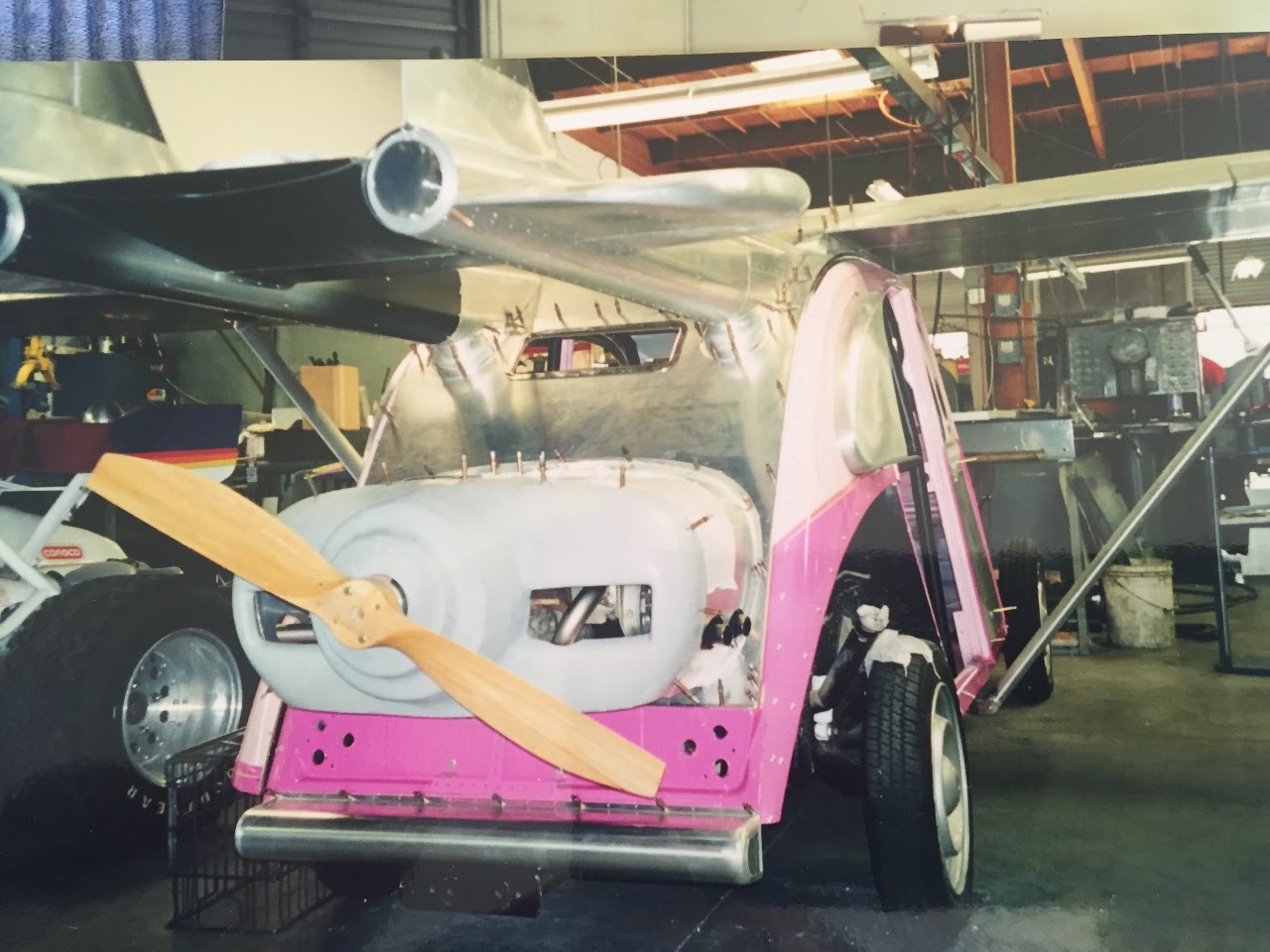
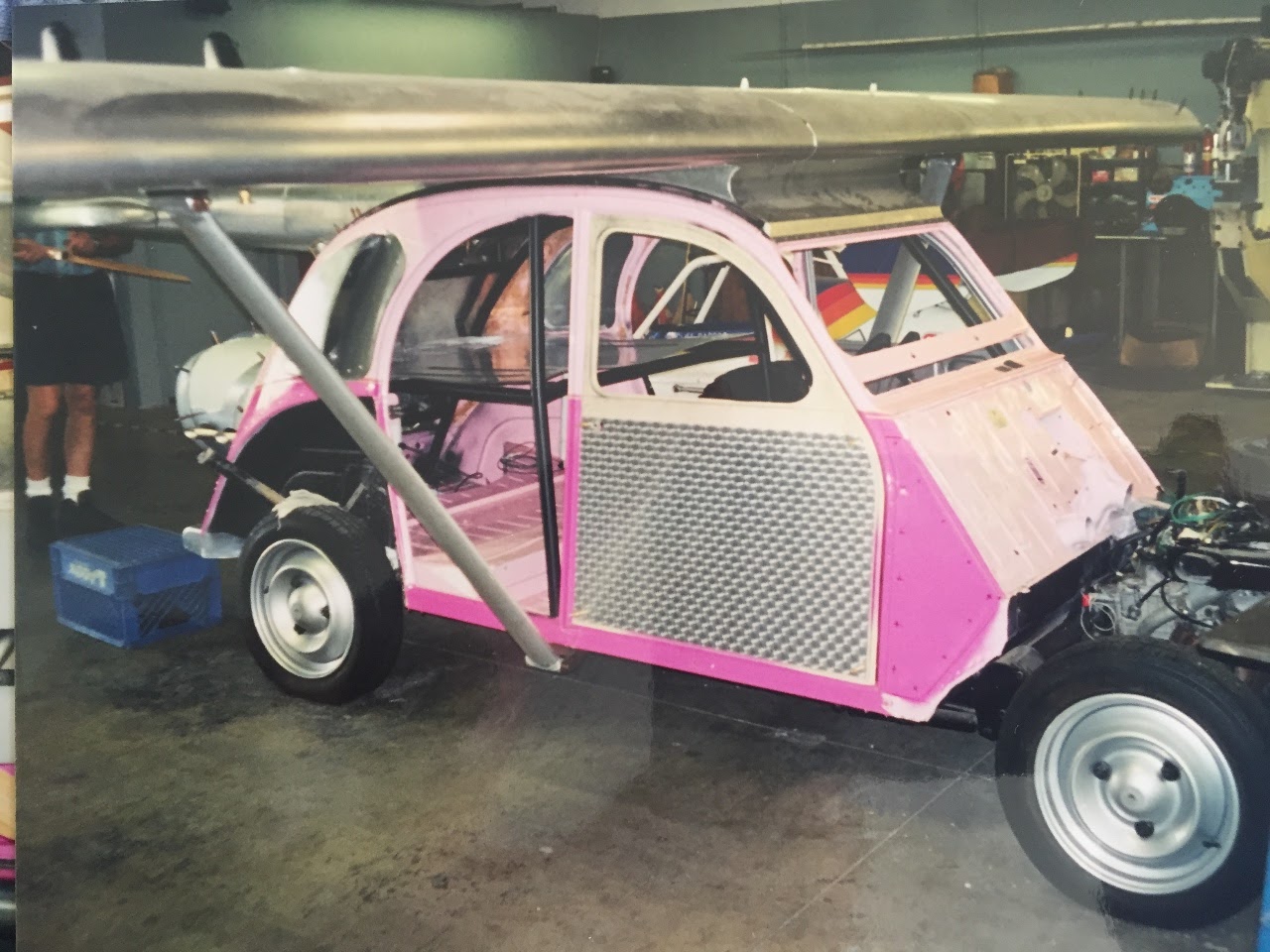
Naturally, Forged Metals was good at metal work.


I’m not sure if all the work was done inside or if they sublet some of it. There was a single wing and a "pusher" engine.


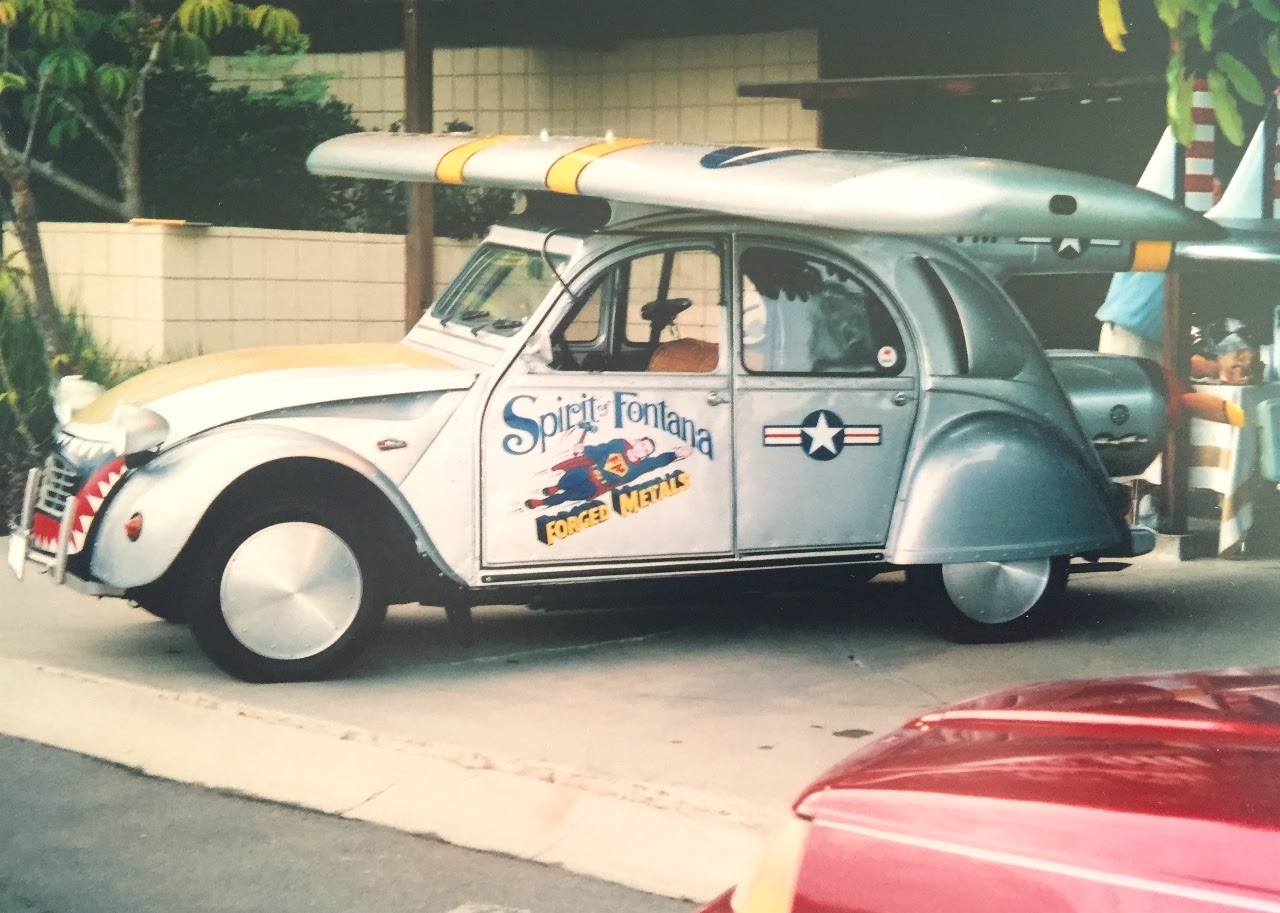
Each time the car was taken to Paris, the exterior cosmetics varied from this version - but the car always ran on its own steam. But it never flew.


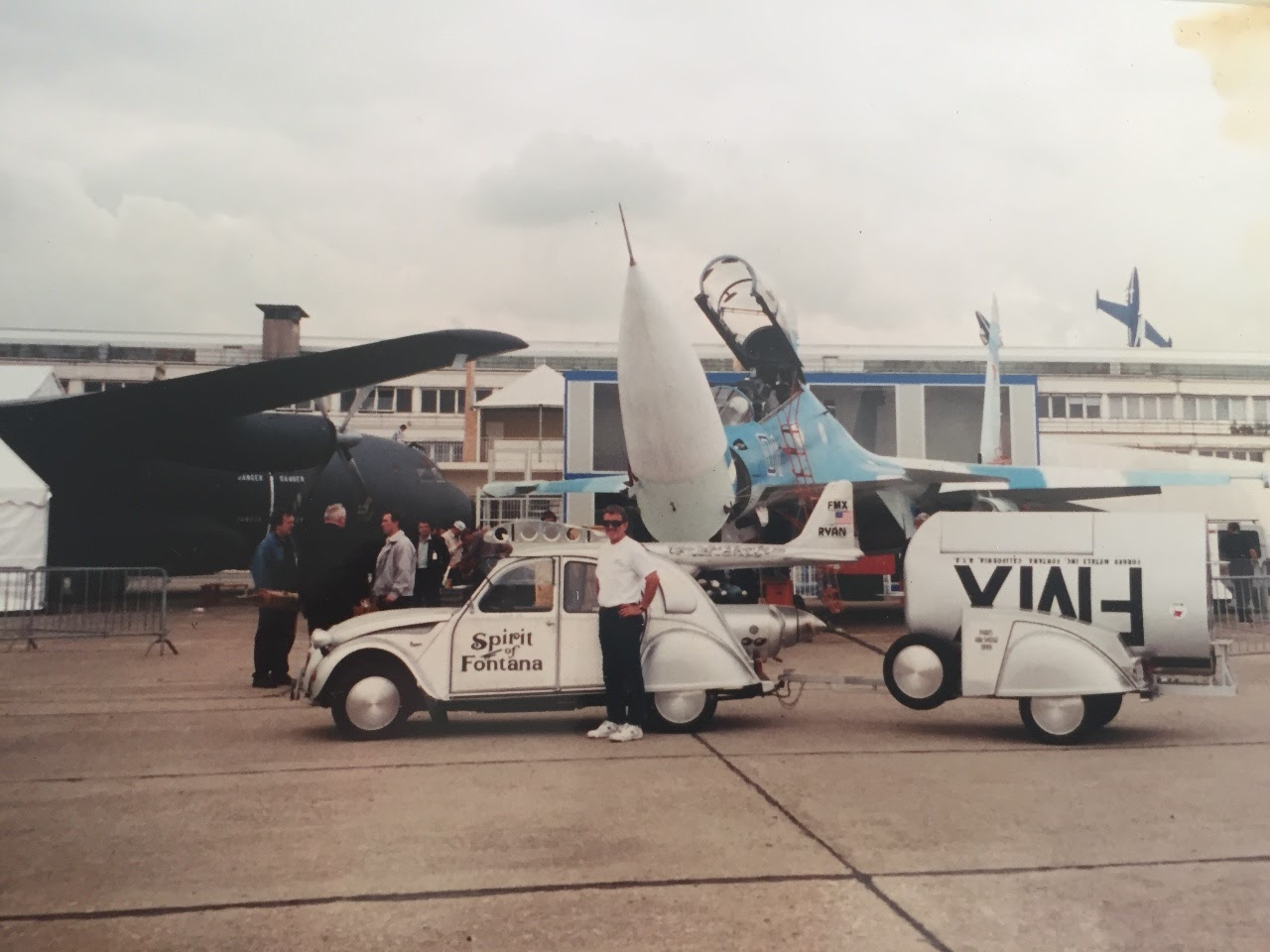
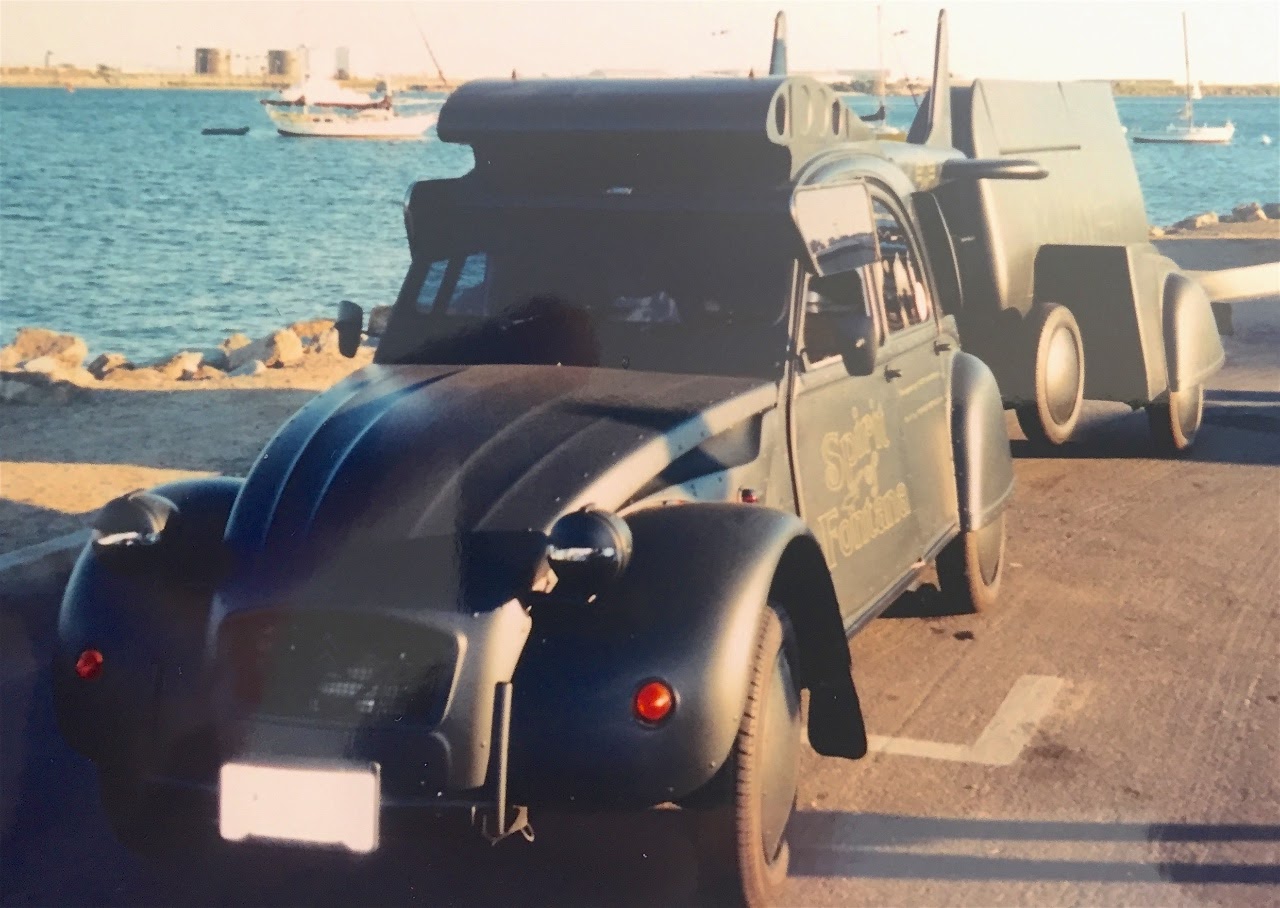
Sadly the trailer/cocktail bar was sacrificed when they made the wings removable. It was converted into a wing carrier, because it's impossible to drive on public roads with the wings on. Here it is in Paris at the air show. That's Gary standing in front of the car.


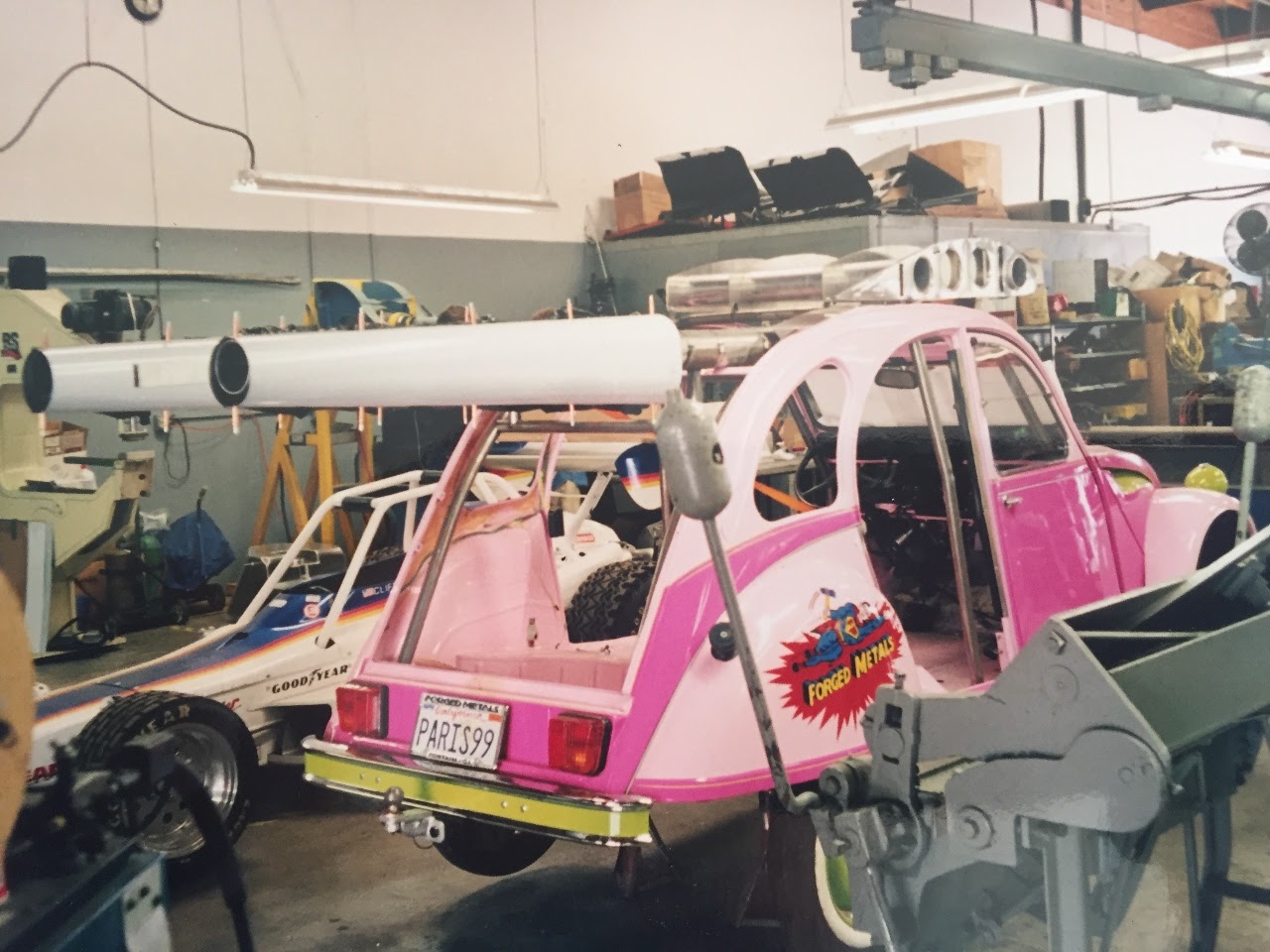
The following show saw the same car but with flashier decor tacked on along with Forged Metal Man, the company mascot. It was renamed Spirit of Fontana.


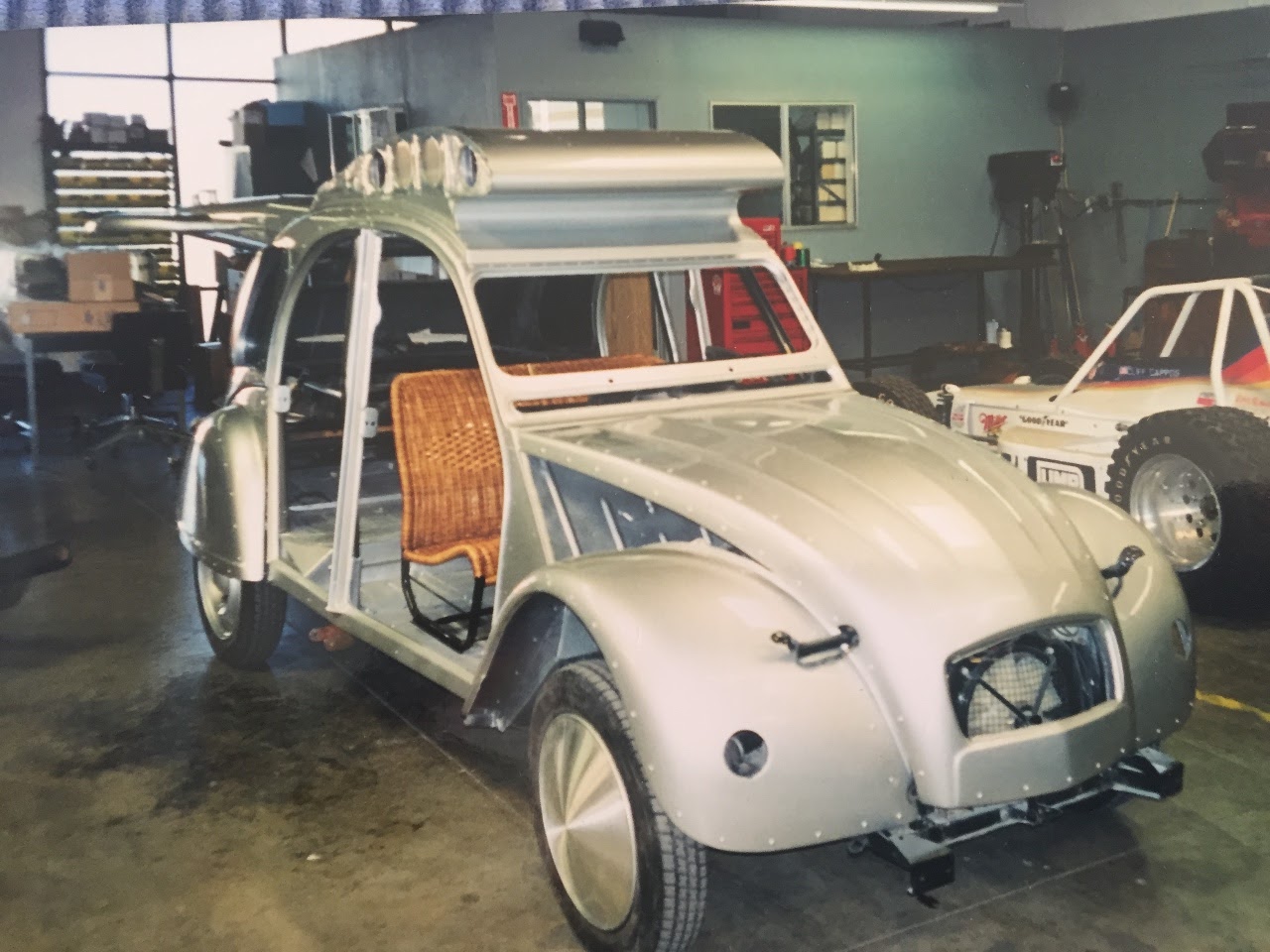
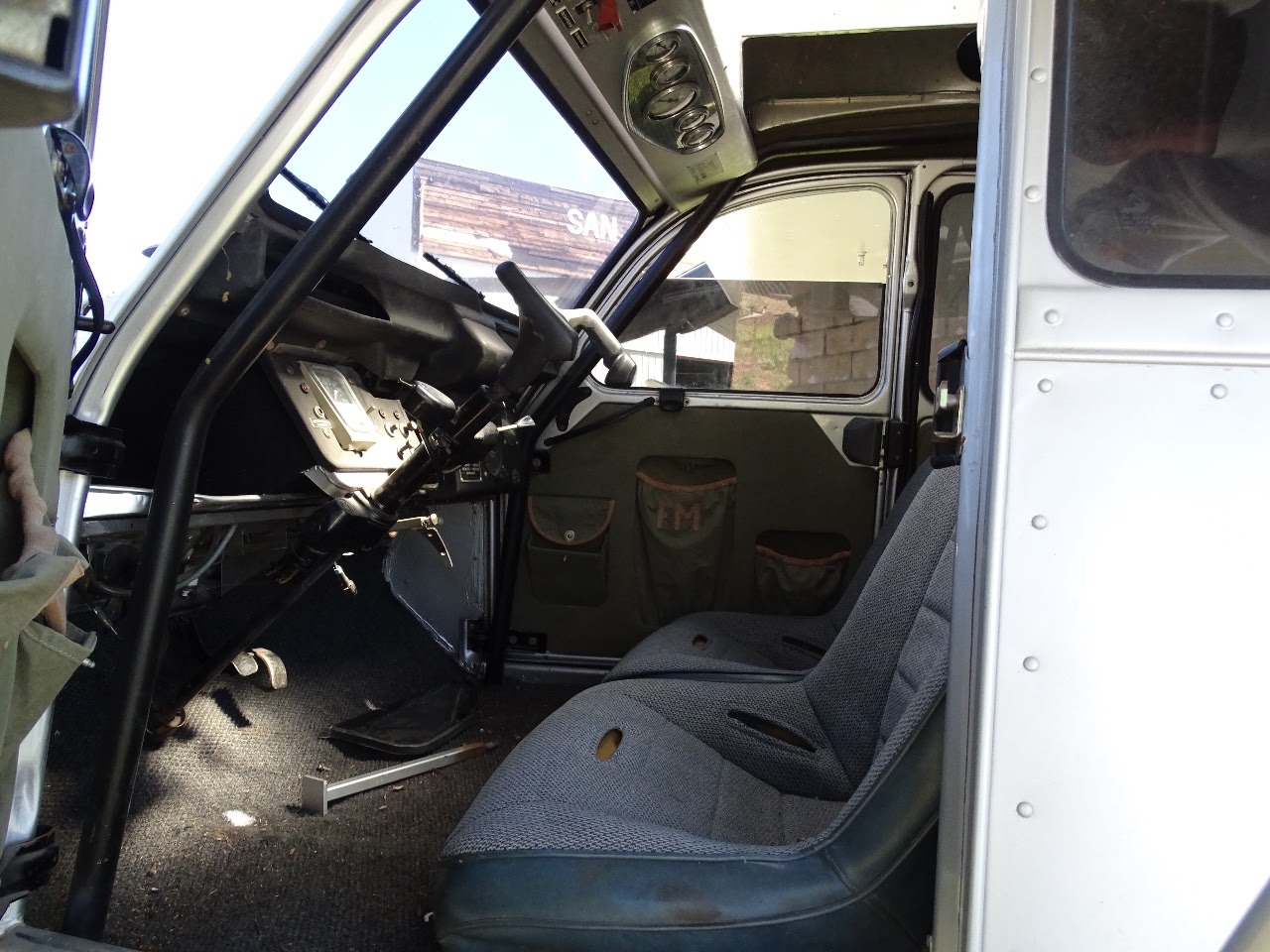
In this iteration the seats were made of wicker, like early aircraft seats. No expense was spared.

Another view as the car is coming together.


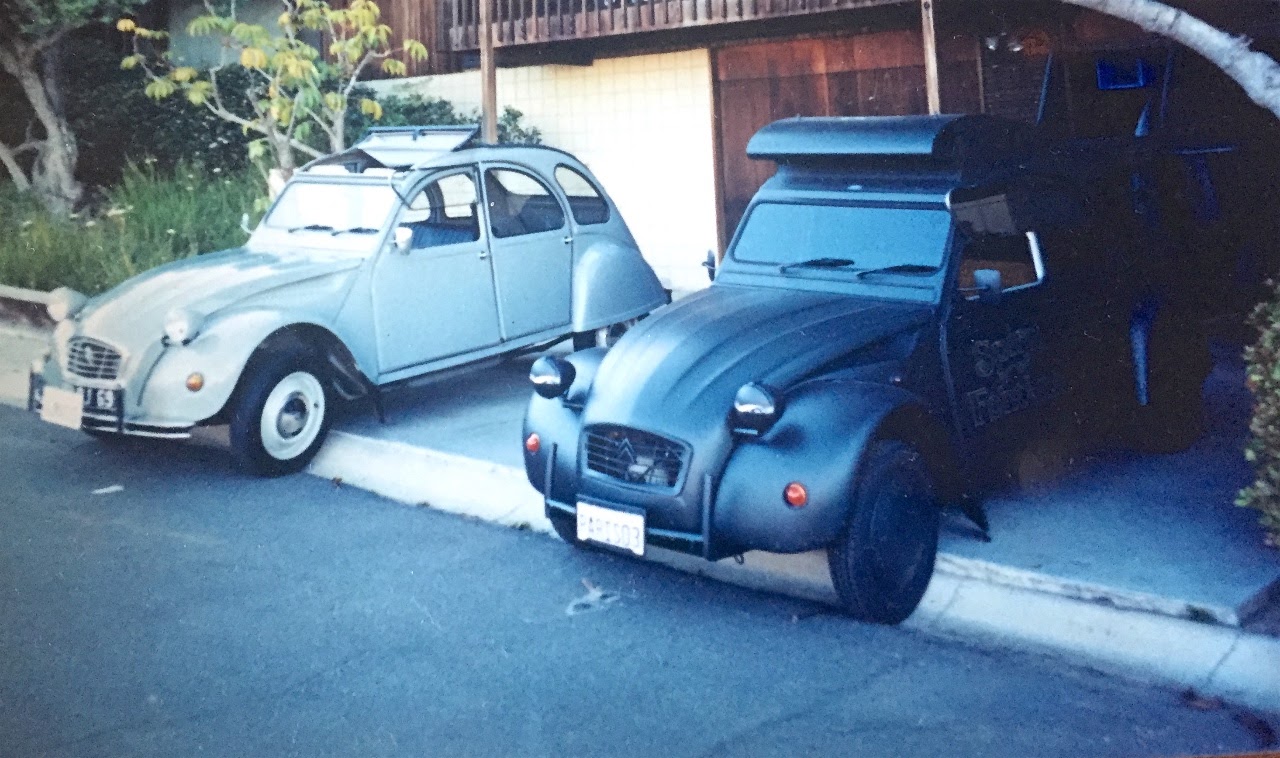
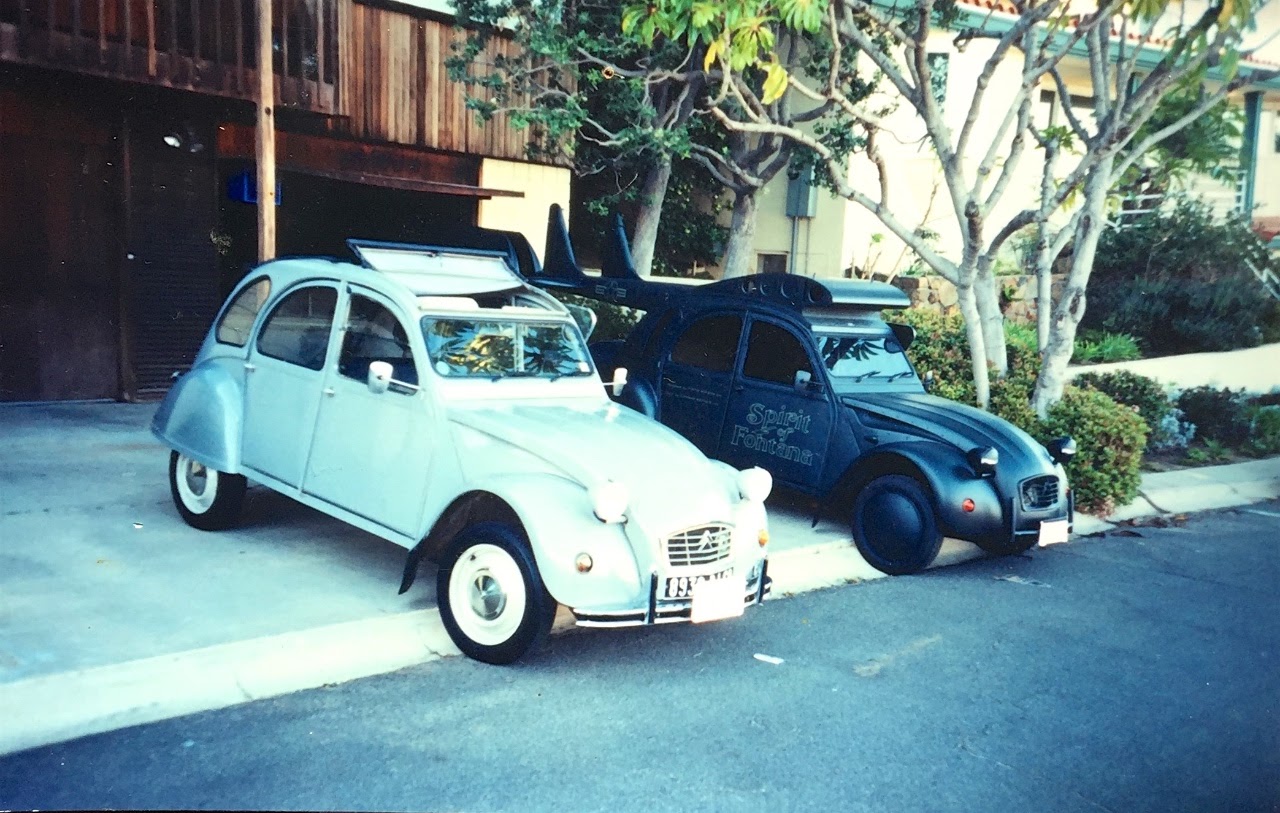
In a subsequent show the flying car became a stealth flghter. Here it is with my 1985 gray 2CV. This is the first time the cars were together. Gary and I had met earlier and he convinced me he had a "one of a kind 2CV". I demanded proof. Here it is!

I owned the car on the left (as I have since it was only a few months old). 


Here is the flying car down on Shelter Island with wings on the trailer. North Island Naval Air Station is in the background.


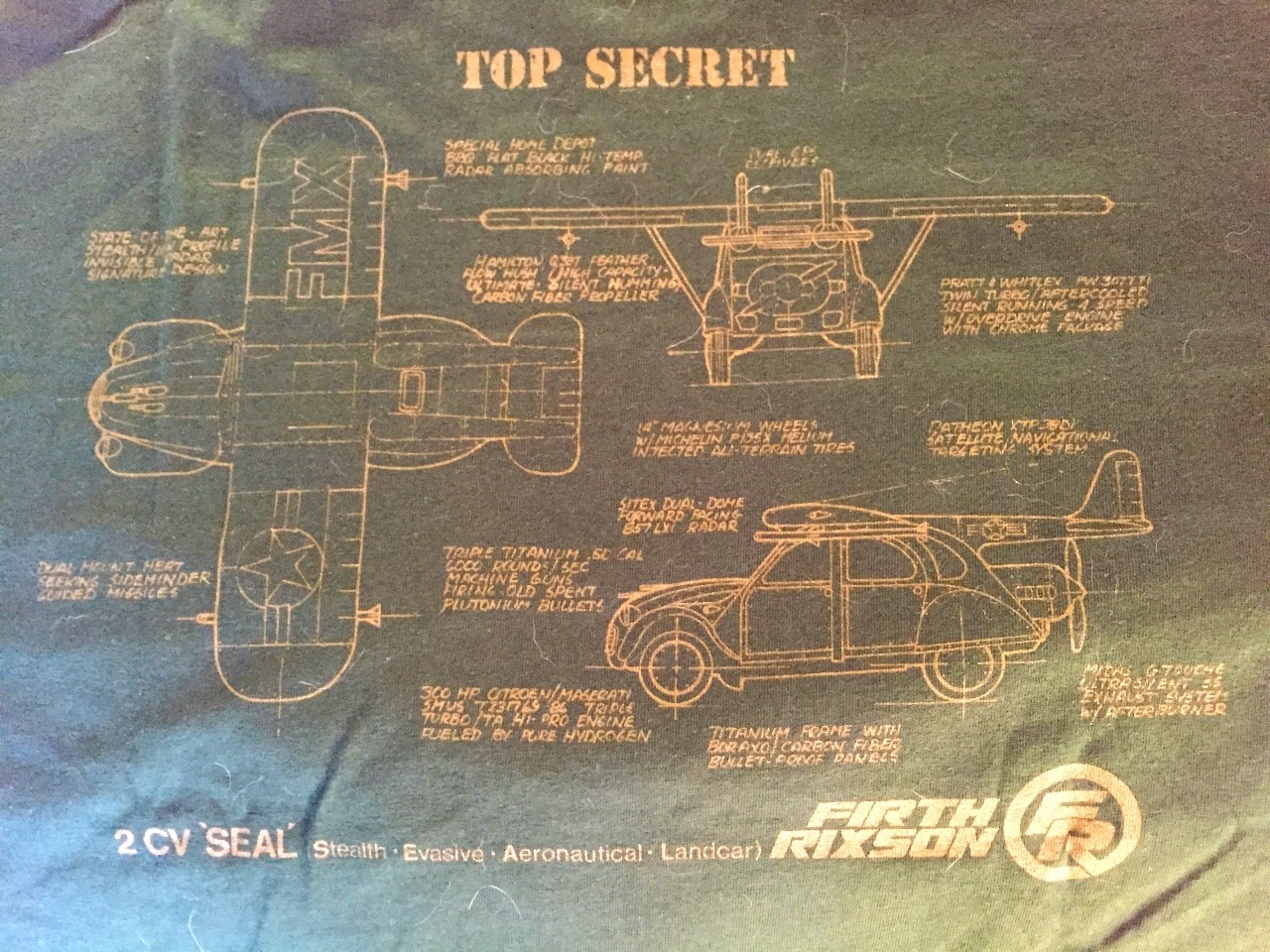
Here is some of the supporting material, such as a special steath t-shirt 


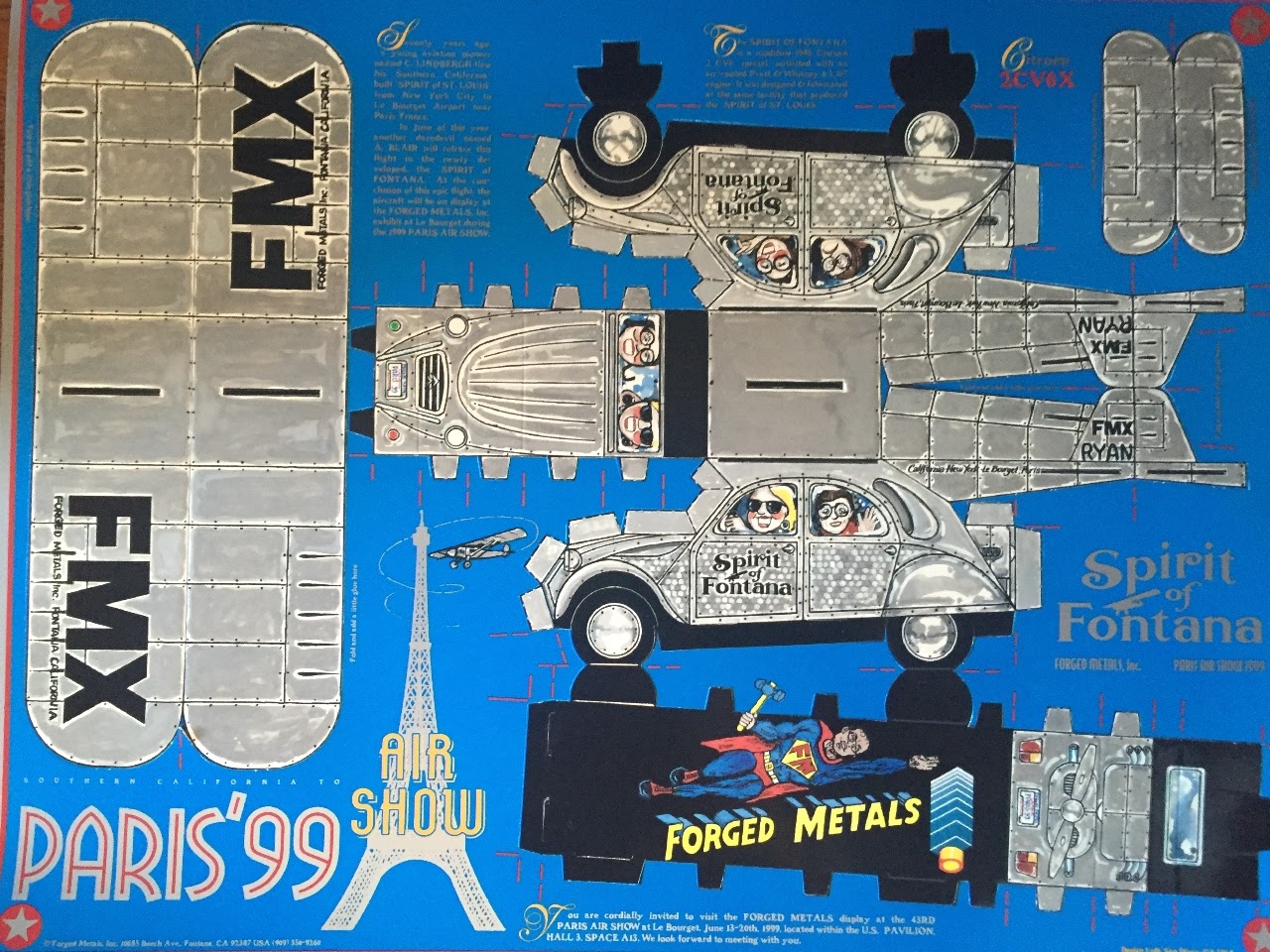
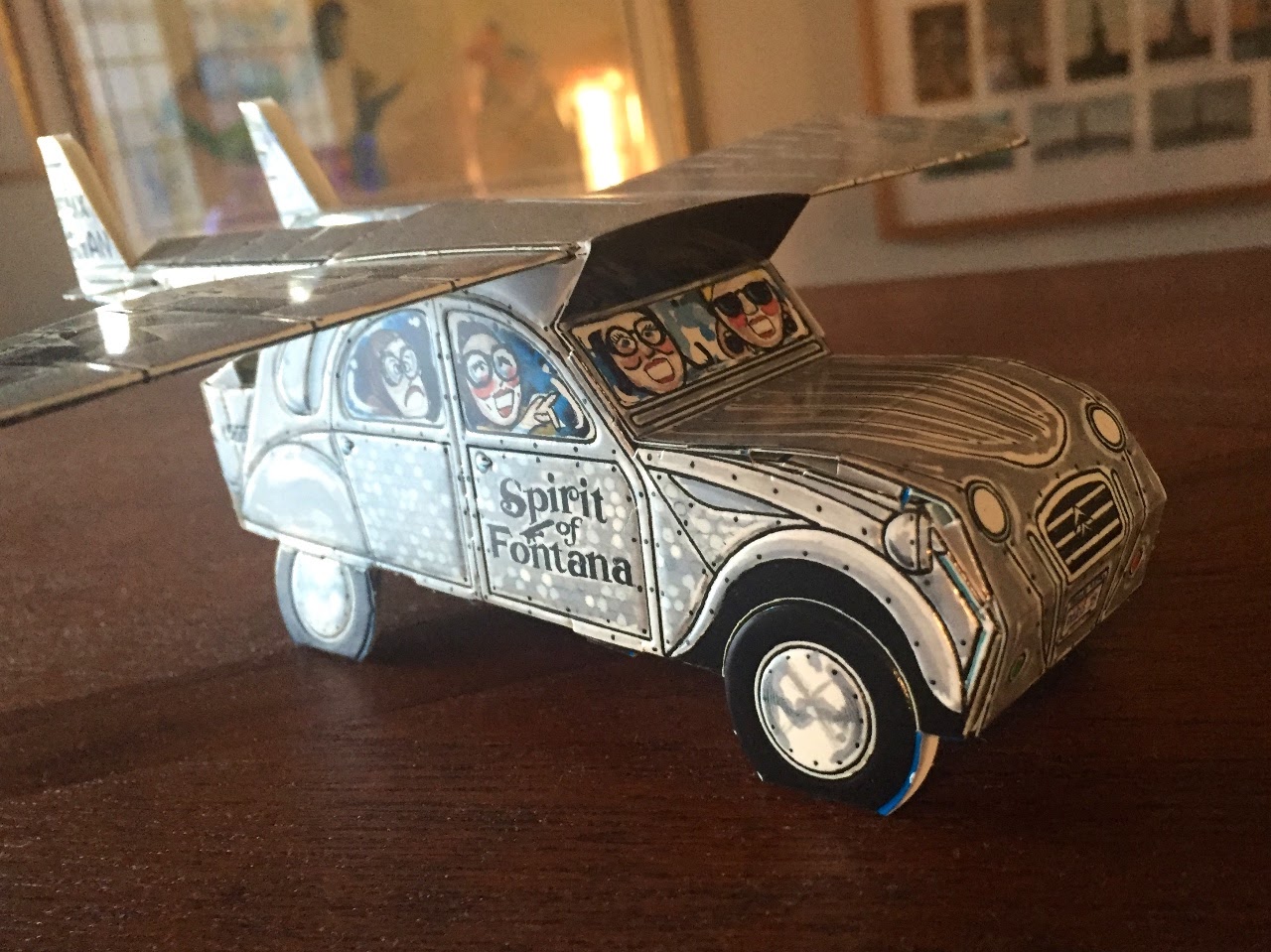
Fold-up model of the car/plane


Your interpretation may vary ...


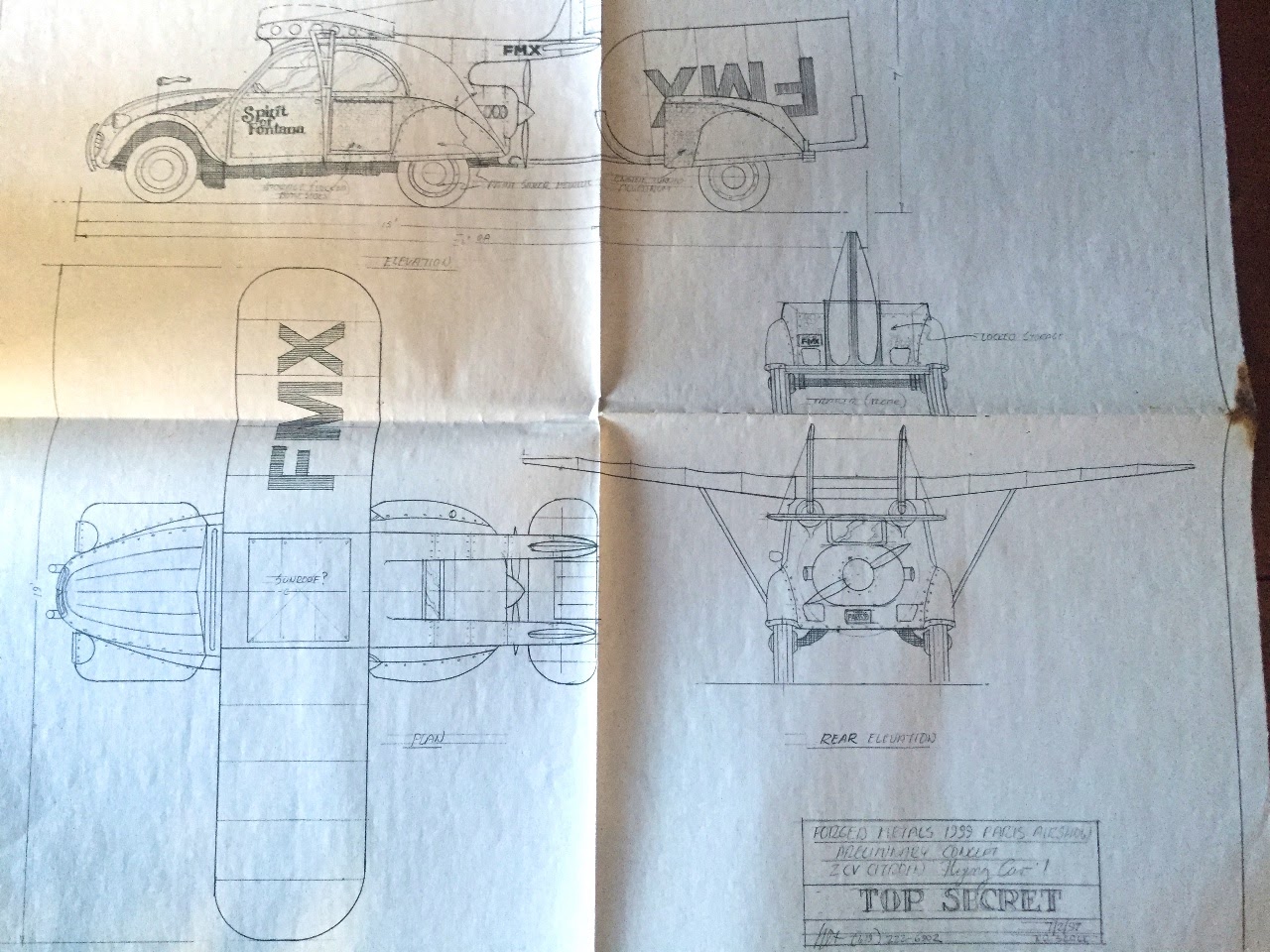
The original plans were rescued at great risk from being burnt in Gary's fireplace - you know in any spy movie they burn the evidence before the authorities can see it ...


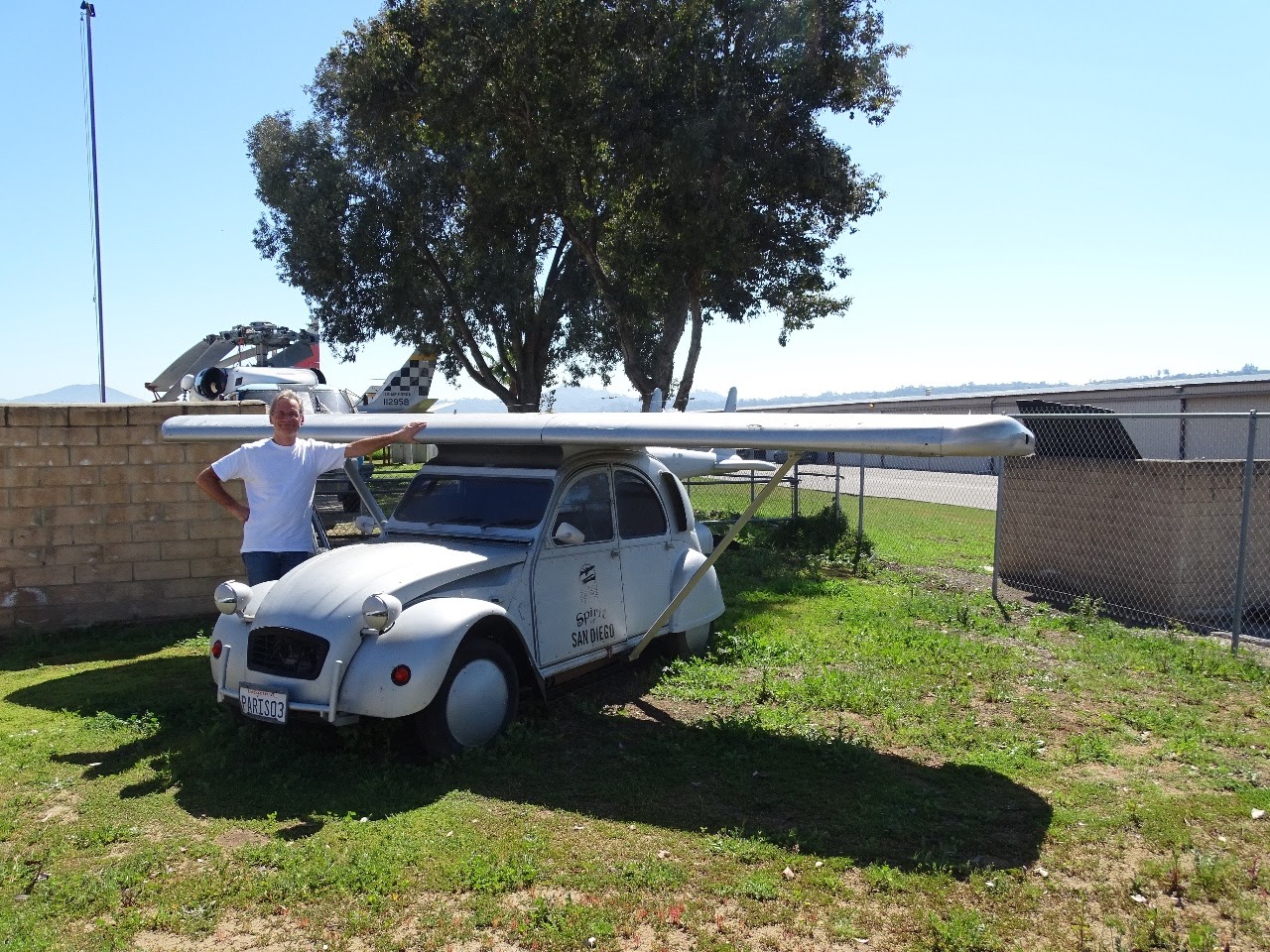
When Forged Metals was sold, the car went away with the company.  Eventually the new owners donated the car to the San Diego Air & Space Museum.

EPILOGUE

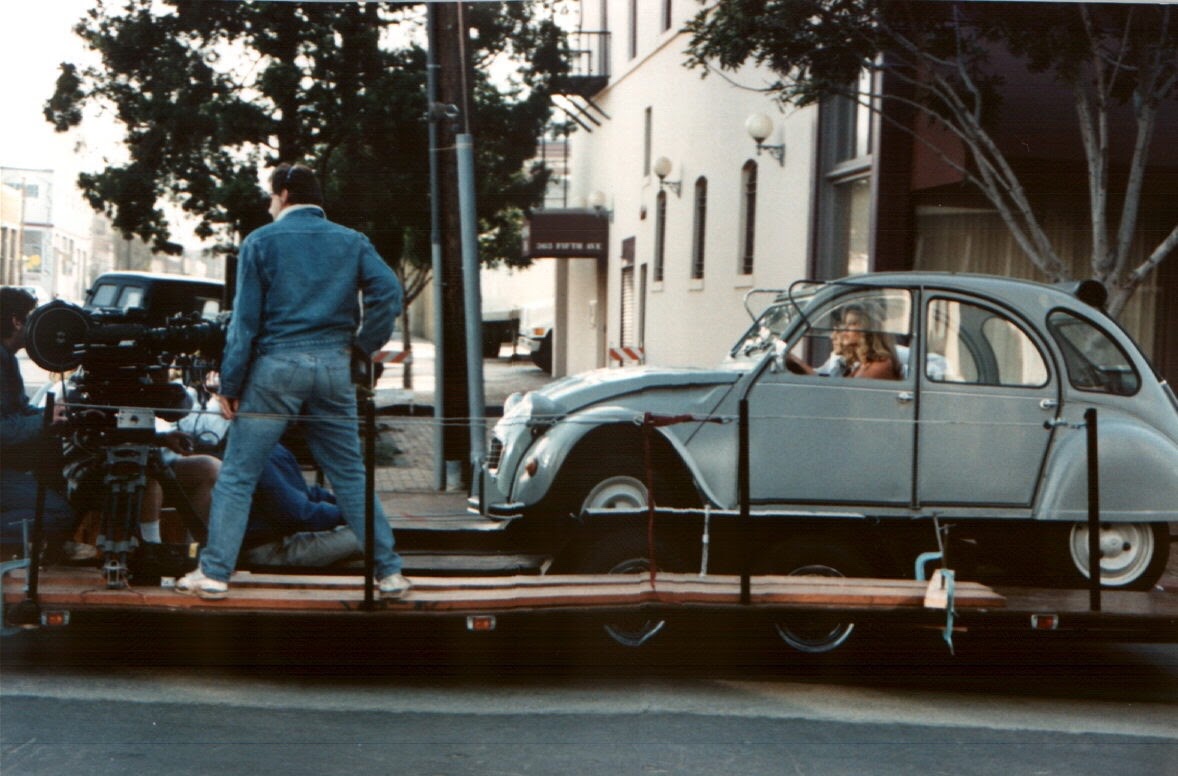
Gary wanted a 2CV of his own and tracked me down and badgered me to sell him my car. After years of pestering, I finally sold him this car in 2003 or 2004. I had 5 2CVs at that time, so I could spare one. This car, which was slightly famous from featuring in an Attack of the Killer Tomatoes movie starring John Astin. Here it is in 1990 being "driven" by the heroine, Angela Visser, formerly Miss Universe.


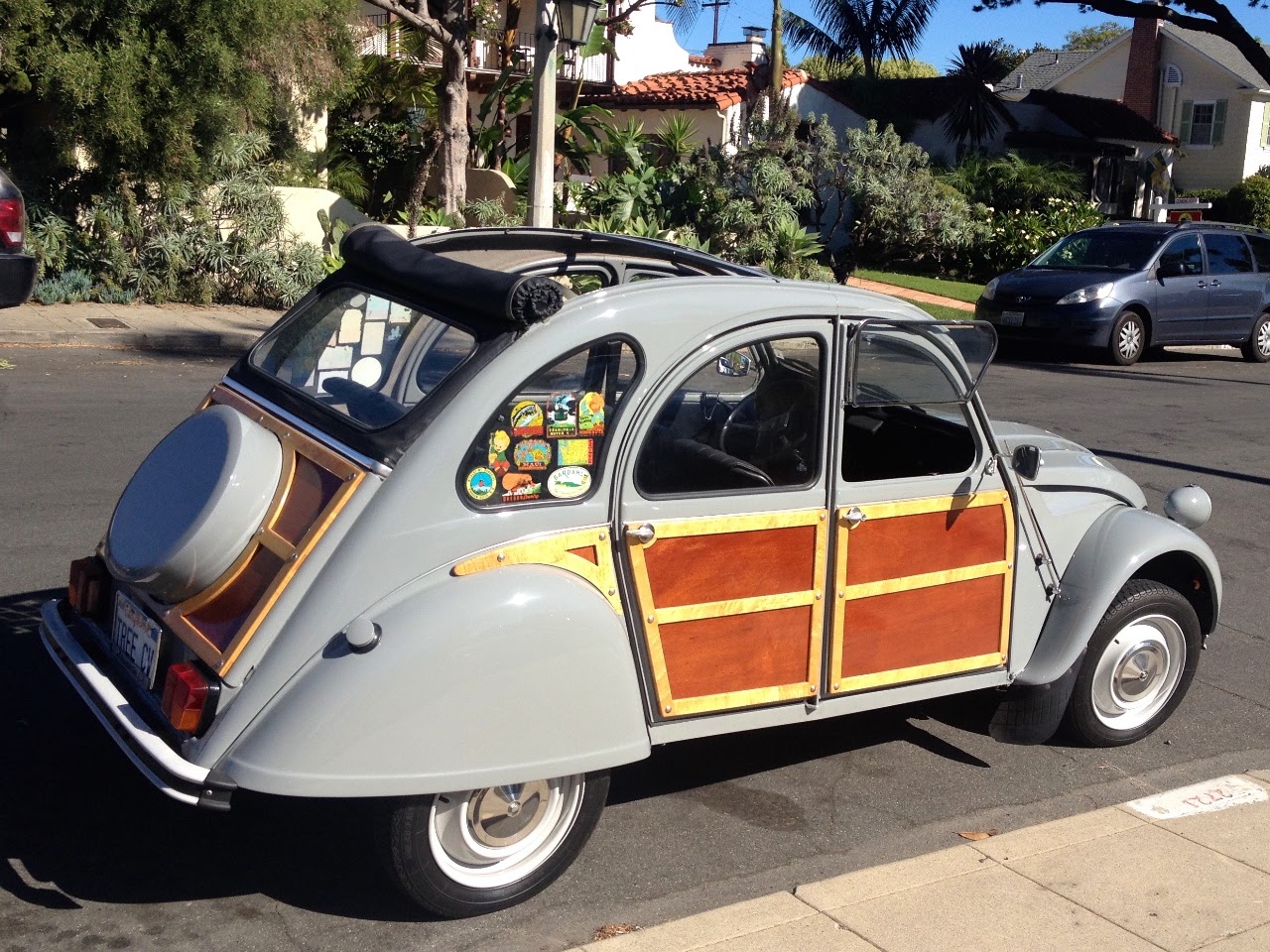
After a couple years owning my car, Gary repainted it and put the wood panels from the first Forged Metals car onto it (he had saved these for a decade in his basement). So the gray car now has these wooden panels from the first generation flying car.


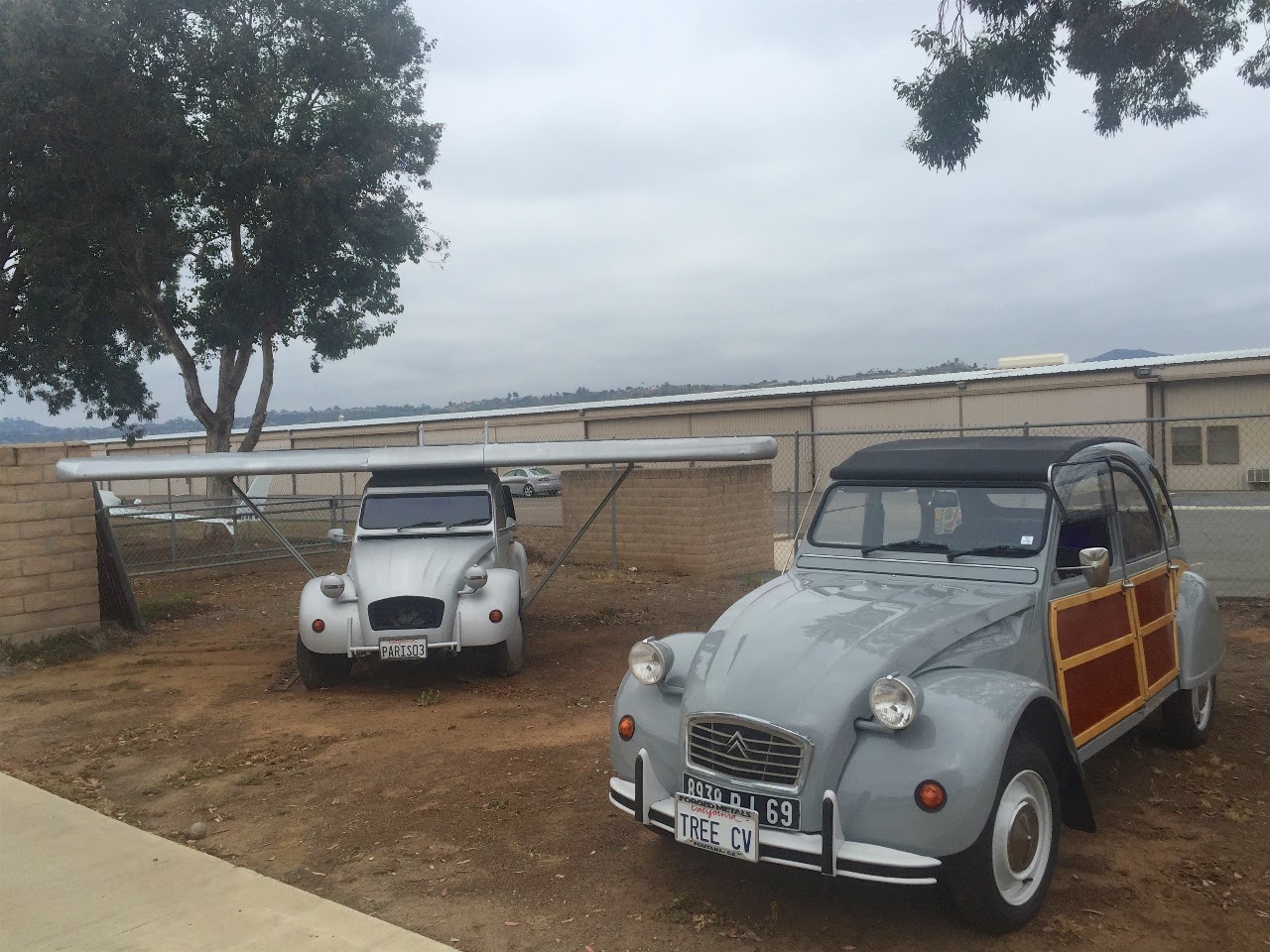
Here we are visiting the Flying 2CV on a gray day a couple years ago. It's a bit forlorn, sitting in a field, used only at parades and such.


I stopped to see it a few weeks ago with a friend from Germany. Notice the sunshine!


Sadly Gary did not live long enough to convert the Tree CV into yet another Flying 2CV. When he passed away, I got the car back along with all the supporting materials. I decided to repaint the neon sign in appreciation of the car's current appearance.


Mike


Tuesday, November 22, 2016

ASSORTED, INTERESTING, OLD VEHICLES

MOPAR 

Let's start first with this big Chrysler Convertible in great condition. I think white and red are the perfect colors for this car.


Then a mildly rat-rodded 2-door Valiant; lowered, with dual exhausts, no badges, blacked out trim, no wheel covers, and matt gray paint


And now its close relation, a 4-door Dodge Dart


MOVING ON TO CHEVROLET

We saw this nice Chevy Camaro SS350 from the late Sixties, I think, with traction bars hanging down. If I recall correctly, these cars had single-leaf rear springs and the suspension needed additional rear stiffening for drag racing.


Now this car wasn't exactly sitting at the curb, but a nice yellow/black Camaro SS convertible can't be omitted from the day's spotting ...

(as I posted this picture, I see another yellow Chevy, an El Camino, in the background. I didn't see it yesterday)


As we rolled past a local fix-it shop, my wife spotted the black truck. My eye went to the 1961 Chevy 2-door mild custom with curved front pillars and flat-top roofline. We'll go back some other day and find out more about the truck.


FORD PRODUCTS

Here we have to be content with only one entry, but what a sight! The Edsel Ranger. You can't miss the look of the worst-selling range ever introduced by Ford. This one's about 1960.


And the final Ford is this little Surprise which I am including for Bill. After an hour of strolling around, we were walking back to the car through an alley and saw a nice Baja Bug. It was very trick, with fresh paint, 1220 motor, dual 2-choke Webers, roll cage, custom suspension, etc. etc.  Look in the garage behind it ...


I commented that "there's a car lover around here, that's for sure!" and two guys popped out of the shadows of the garage. We talked cars for 15 minutes, then my wife asked "What's under the car cover?"


Here is the owner and constructor of this "1927 Ford" He designed the car layout, built the frame, collected all the parts, painted the car, and built it up - here in his garage.


Drill press, lathe, welder, grinder, etc. He was an IT guy who went to community college shop classes at night for entertainment.

This car was intended to be black, but he saw a good friend (in a black car) get hit on a sunny, clear day ... and immediately made plans to paint his car a more visible color.


I particularly like the red coated exhaust and wheels. The body is a fiberglass bucket; the engine is a 289 with a 302 crank. For those who prefer a steel body, he's working on one of those too. The guy holding the tarp owns the VW out in front. Notice the friction shocks and low-capacity fuel tank (it matches the bladder capacity of an "older gentleman").


The car club he belongs to is 70 years old. They admit Ford vehicles only, which must be 1948 or older, have three major modifications from stock condition, have glossy paint, upholstery, and run. This is his third rod and you can learn more about it by checking this article from a year ago:


I hope you enjoyed theses finds.

Cazalea